
Last updated November 3, 2026
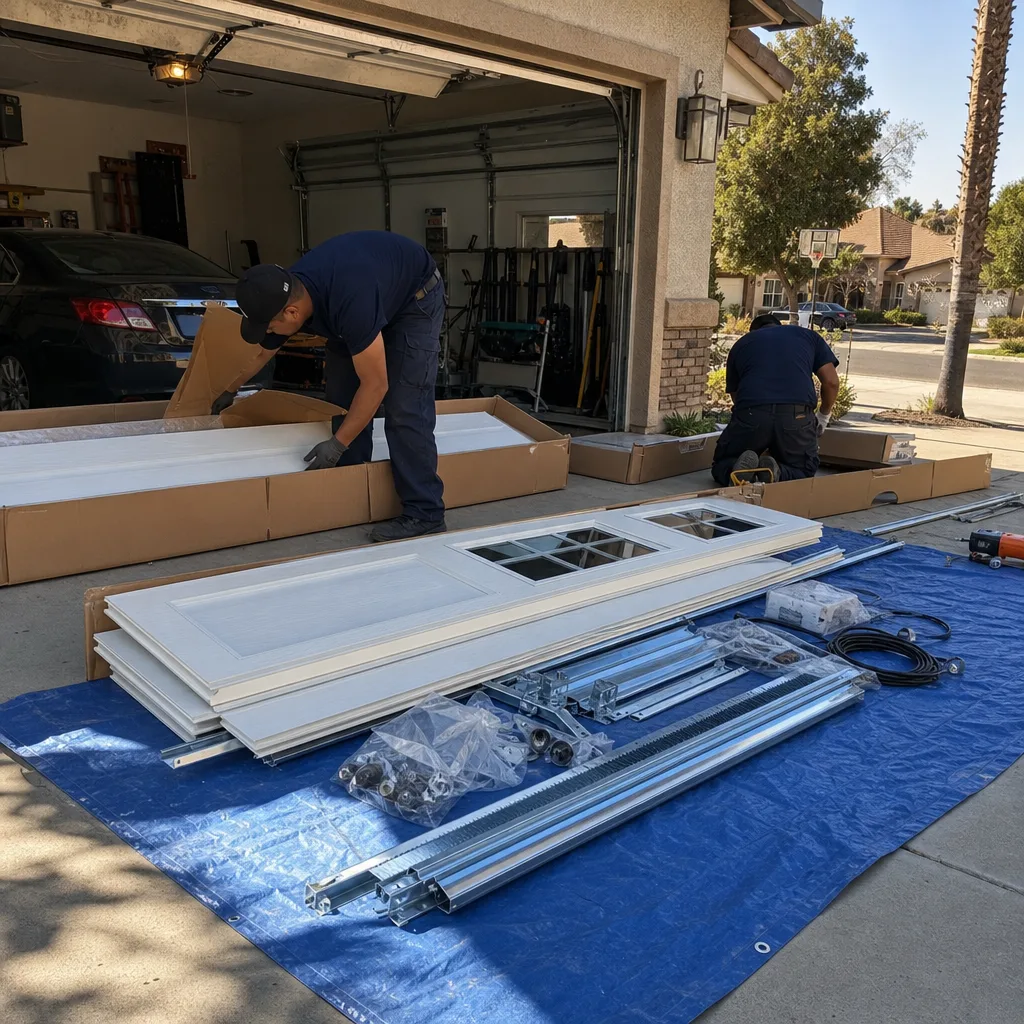
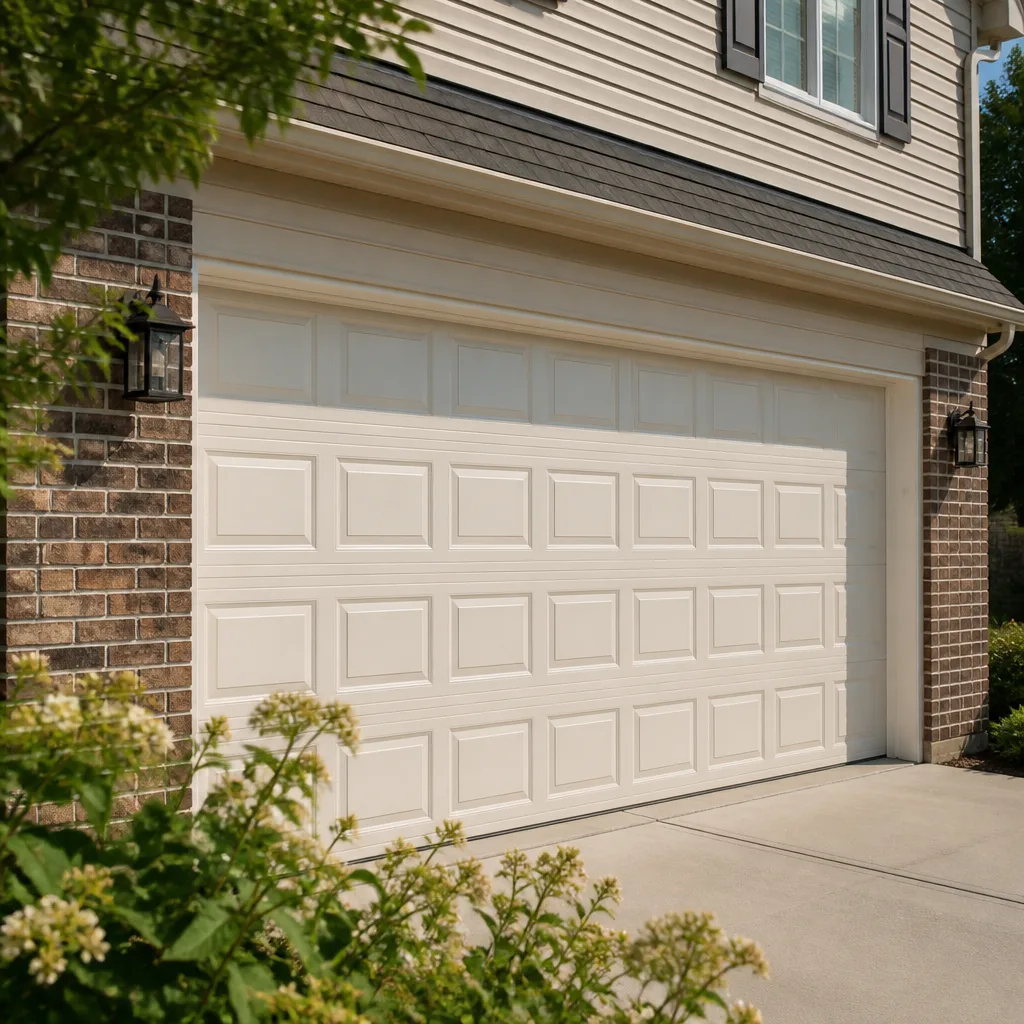 Raised-panel steel
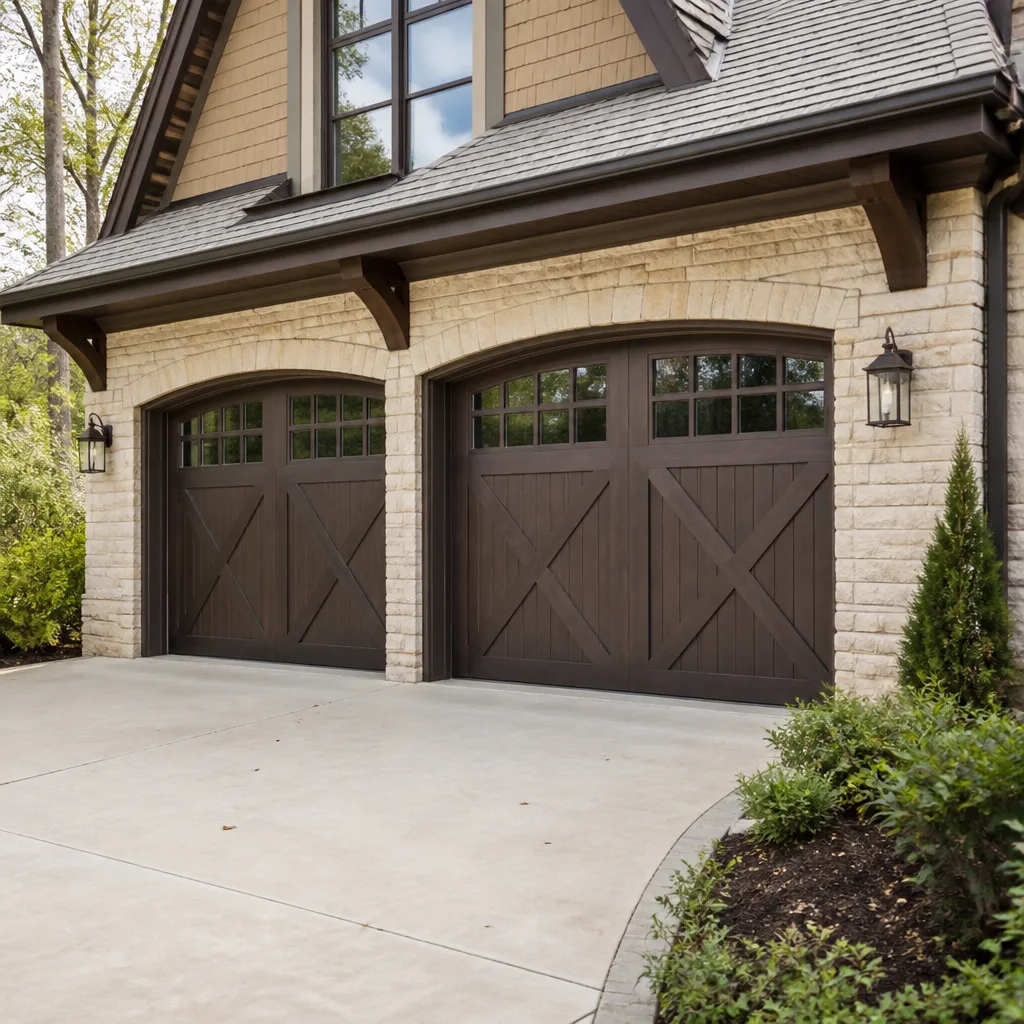 Carriage house
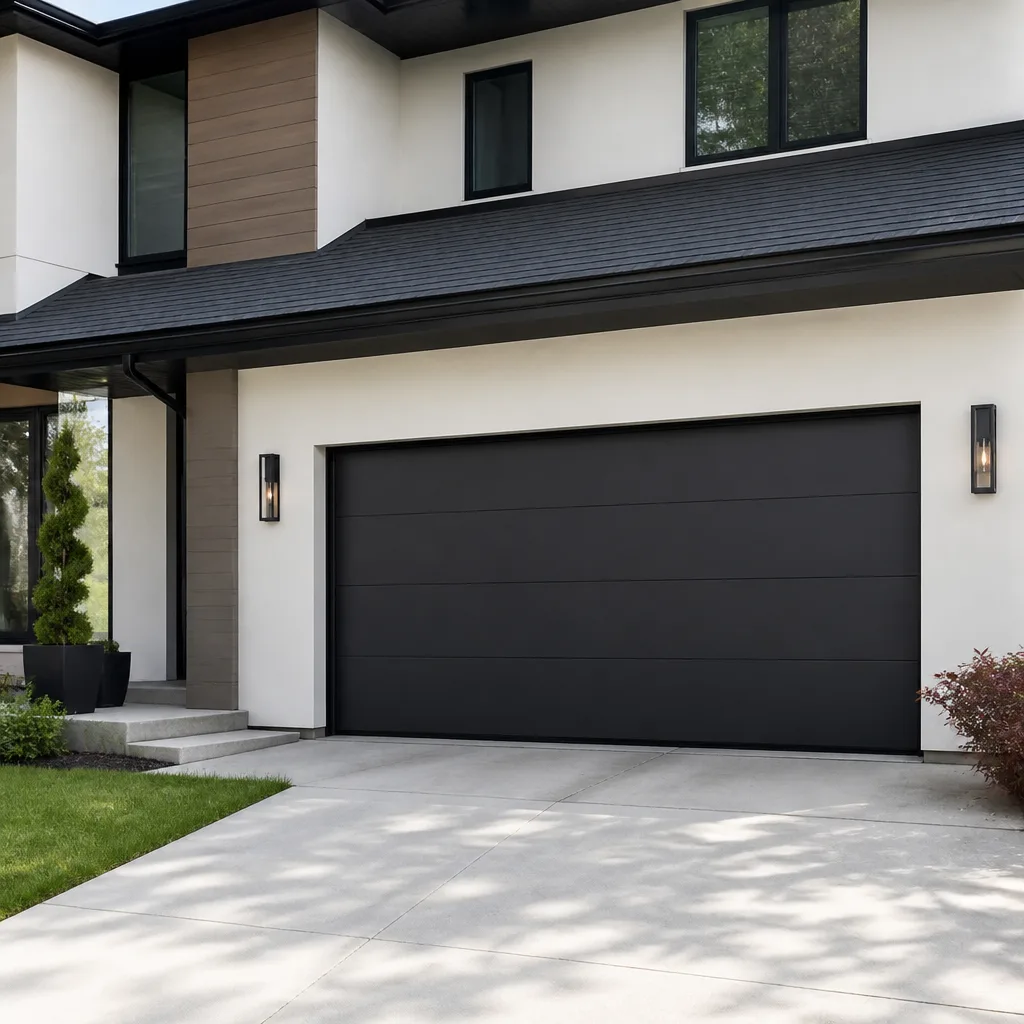 Modern flush
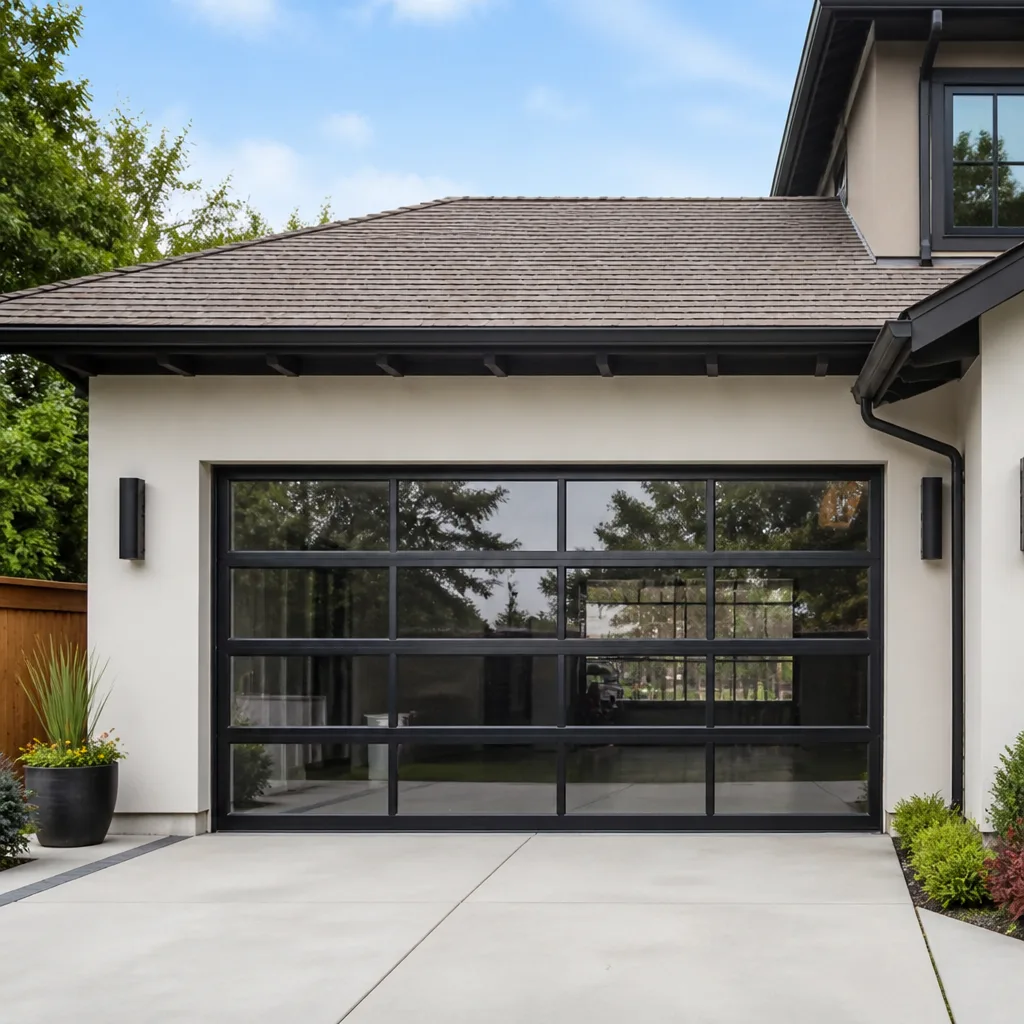 Full-view glass
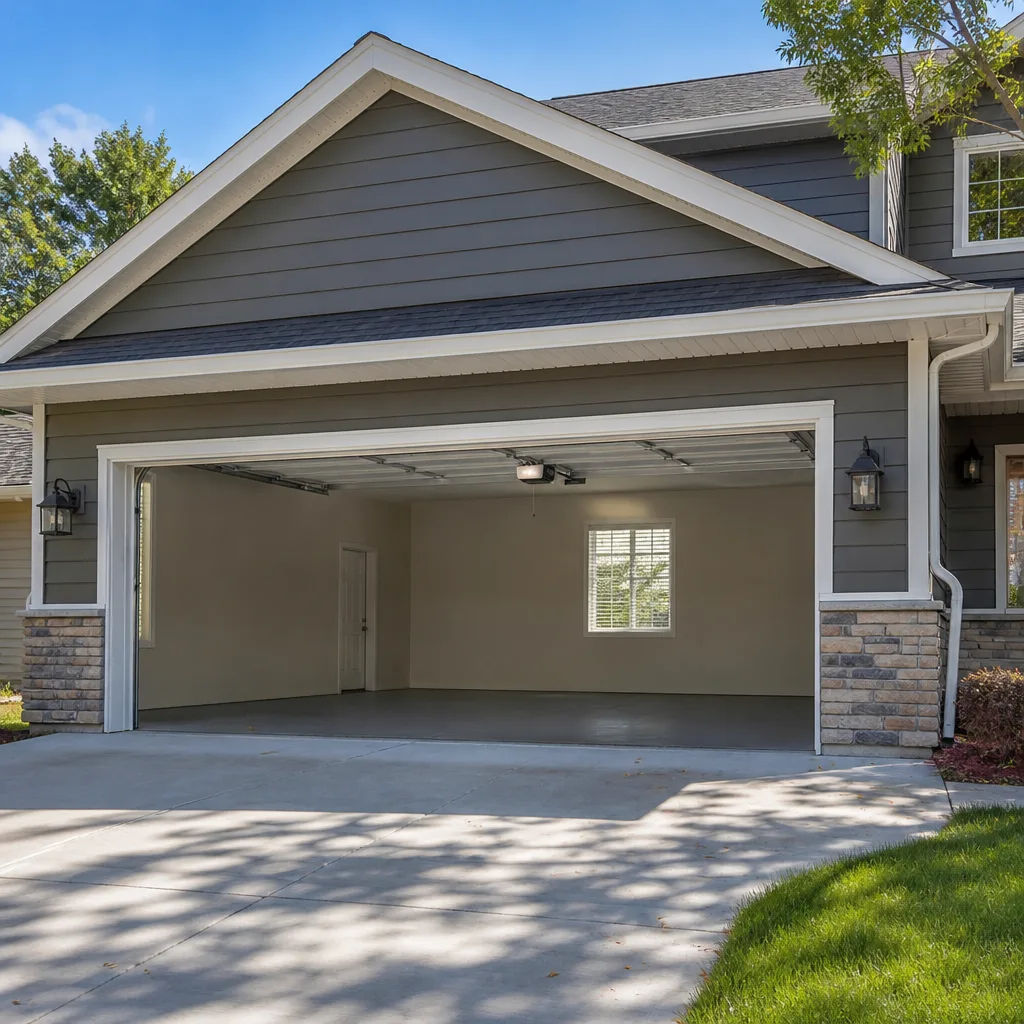 LiftMaster openers
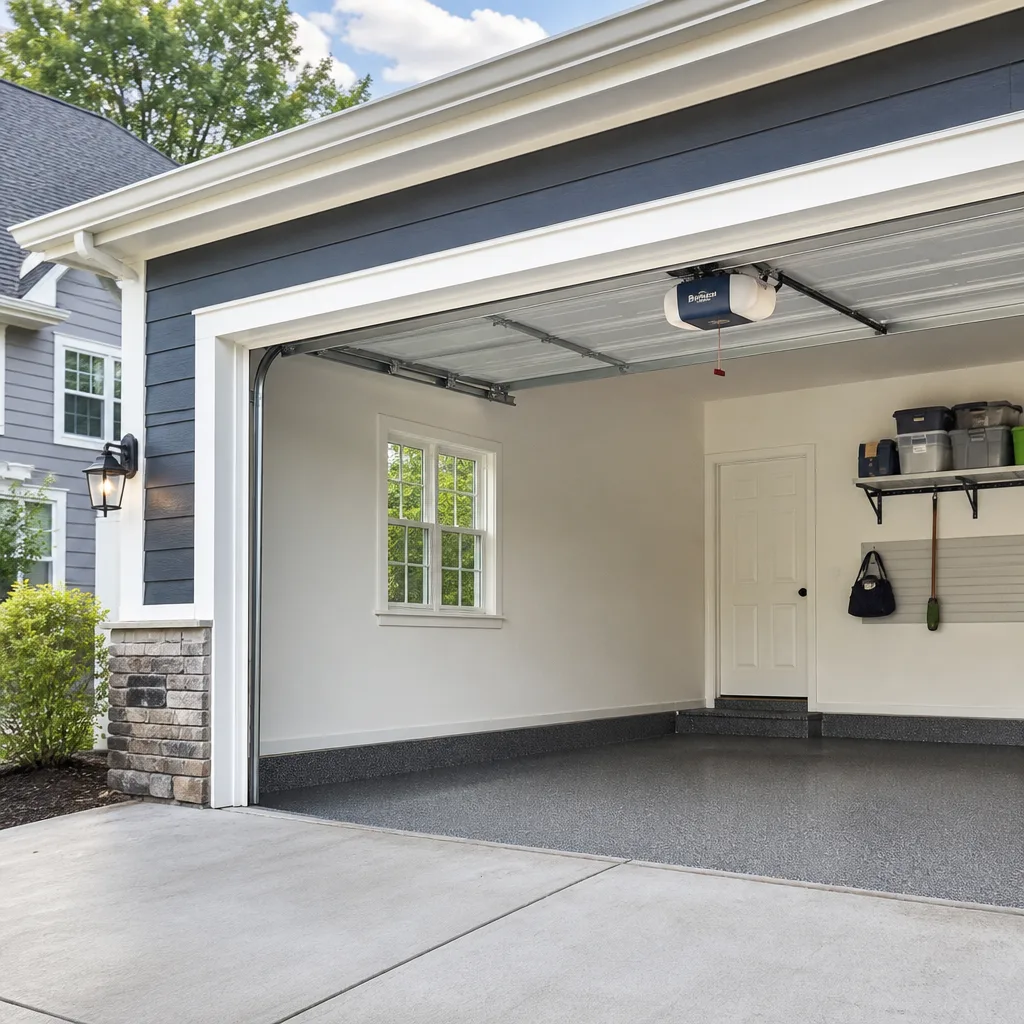 Chamberlain openers
Full 25-point door and opener safety check with every visit - springs, cables, rollers, tracks, and your LiftMaster or Chamberlain opener included
You get a price before we start. It does not change when the truck arrives.
Get your free estimateSeasonal Garage Door Care for Redlands: Year-Round Homeowner’s Guide
Most Redlands homeowners think about their garage door twice: when it opens and when it closes. The Santa Ana wind events that barrel through the Inland Empire every September and October are the most underrated garage door threat in this city. They drive dust and grit into roller tracks faster than a full year of normal operation, and by the time most people notice, the door is already grinding metal-on-metal. This guide gives you a complete year-round maintenance calendar built around Redlands’ actual seasonal stress points, not generic spring-cleanup advice. For more local tips, see our The Complete Garage Door Repair Guide for Redlands Homeowners. You’ll learn exactly what to check, when to check it, and what to leave for a professional.
Styles & brands we work with
- Raised-panel steel
- Carriage house
- Modern flush
- Full-view glass
- LiftMaster openers
- Chamberlain openers
Quick Answer
Redlands doesn’t have four traditional weather seasons, but it does have four distinct garage door stress seasons: peak summer heat, fall Santa Ana winds, mild wet winters, and spring temperature swings. Each season puts different components under load, and a simple maintenance schedule timed to these events prevents most of the failures we see. The single most important task in Redlands is cleaning tracks and rollers after Santa Ana events, followed closely by checking spring tension before and after summer heat waves.
Table of Contents
- Why Redlands Weather Is Different for Garage Doors
- Summer Heat: What 100°F+ Does to Springs, Cables, and Openers
- Santa Ana Season: The Post-Wind Cleanup Protocol
- Winter Rain and the Corrosion You Can’t See
- Spring Temperature Swings and Sensor Drift
- The Redlands Month-by-Month Garage Door Calendar
- Brand-Specific Maintenance Notes
- Common Mistakes to Avoid
- When to Call a Professional
- Frequently Asked Questions
- The Bottom Line
Why Redlands Weather Is Different for Garage Doors
Redlands sits at roughly 1,400 feet elevation in the San Bernardino Valley, which means it gets sharper temperature swings than communities closer to the coast. A 40-degree day-to-night spread is common in spring and fall, and that thermal cycling affects every metal component on your door. Steel tracks expand and contract. Springs lose a measurable fraction of their tension when cold and regain it when hot. Nylon rollers respond differently than steel ones. None of this is catastrophic on its own, but it compounds over time in ways that surprise homeowners who’ve lived in more stable climates.
We’ve worked on garage doors in Redlands across all four of the major residential manufacturers we service, including Amarr and Wayne Dalton models, and the failure patterns are consistent. It’s rarely one dramatic event. It’s the accumulation of small stresses: dust from a Santa Ana event, a heat wave that pushes a marginally adjusted spring past its limit, moisture that sits on a bottom bracket after a rare rainy week. Understanding this pattern is the key to preventing most repairs.
Summer Heat: What 100°F+ Does to Springs, Cables, and Openers
Redlands regularly sees daytime highs above 100°F between June and September. That heat changes how torsion springs behave. As metal heats, it expands and loses a small amount of torsional force. A spring that was perfectly balanced in March may be slightly under-tensioned in August. You’ll notice it as a door that feels heavier by a few pounds when you lift it manually. That extra load transfers to the opener motor, which runs hotter and works harder. Over a season of daily use, this is how openers burn out prematurely.
Here’s what we recommend checking before and after heat waves:
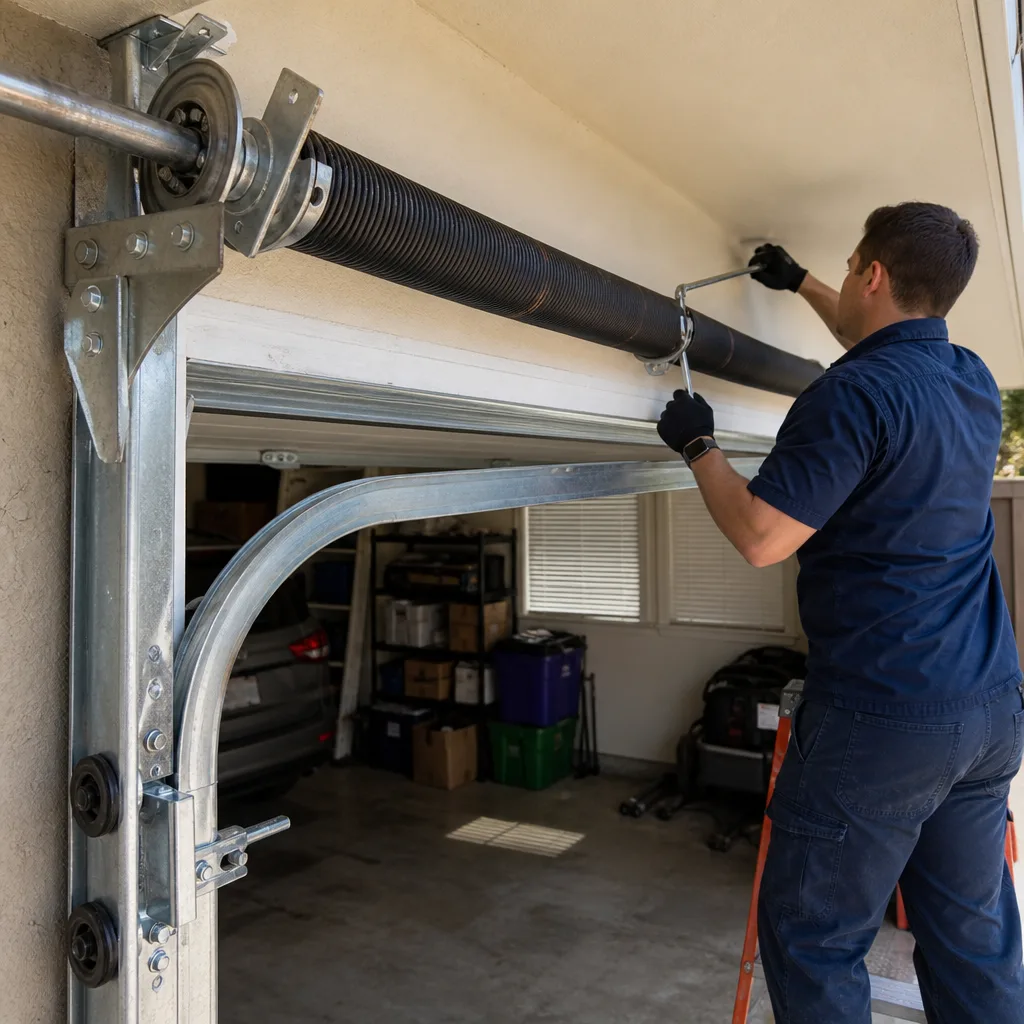
- Test the manual balance once a month in summer. Pull the emergency release cord and lift the door halfway. It should stay in place. If it drops, the springs need adjustment. Don’t try to adjust them yourself, torsion springs are under enough tension to cause serious injury. Call a professional.
- Listen for a straining opener. If your LiftMaster or Craftsman opener sounds like it’s working harder in August than it did in May, that’s the spring tension telling you something. The fix is a spring calibration, not a new opener.
- Check the weatherstripping along the bottom. Extreme heat makes vinyl and rubber seals brittle. Once cracked, they let hot air, dust, and pests into the garage. Replace them at the first sign of brittleness.
- Inspect cables for fraying. Heat accelerates oxidation on steel cables, especially where they wrap around the drum. A frayed cable on a door with weakened springs is a failure waiting to happen.
Summer is also when we see the most garage door opener motor failures in Redlands. The ambient heat inside an uninsulated garage can hit 120°F or higher, and opener circuit boards don’t love that. If your garage door opener repair in Redlands becomes necessary, it’s often traceable to a season of heat-stress operation.
Santa Ana Season: The Post-Wind Cleanup Protocol
Between late September and November, Santa Ana winds sweep through Redlands and the Inland Empire with gusts that routinely exceed 40 mph. These winds carry fine dust from the high desert and whatever debris is loose in your neighborhood: leaves, twigs, pollen, and a surprising amount of grit. All of it ends up in your garage door tracks, inside the roller bearings, and packed into the gaps around weatherstripping.
The damage isn’t immediate. It’s cumulative. Grit in a track acts like sandpaper every time the door cycles. Within weeks, rollers develop flat spots and the door starts to sound rough. Left unchecked, you’ll eventually need roller replacement and possibly track realignment. Here’s the cleanup protocol we recommend after every significant Santa Ana event:
- Disconnect the opener and manually open the door halfway. Lock it in place if possible.
- Wipe down both vertical tracks with a dry microfiber cloth. Then use a damp cloth with mild detergent. Don’t use grease or WD-40. Tracks should be clean and dry.
- Inspect each roller for visible grit or damage. Nylon rollers with sealed bearings resist dust better than steel rollers. If you see rust or wobble, they’re due for replacement.
- Clean the weatherstripping along the bottom edge and the side jambs. Compressed air works well for this. Dust that packs into these seals prevents them from closing fully.
- Check the photo-eye sensors at the base of the door. Dust on the lenses is the single most common cause of “door won’t close” calls we get in October and November in Redlands.
If your door already has a rough grind when it moves, the damage is done and cleaning won’t fix it. At that point, you need a professional to assess roller and track wear. This is precisely the kind of problem that gets worse the longer you wait.
Winter Rain and the Corrosion You Can’t See
Redlands gets most of its rain between December and March, and while totals are modest compared to coastal communities, it’s enough to create real corrosion problems. The issue isn’t the door panels, those are painted or powder-coated. The issue is hardware: bottom brackets, cable drums, hinges, and the spring anchor points. When rain water splashes up from the driveway and sits on these components, rust starts.
Bottom brackets are the most vulnerable part. They sit at the lowest point of the door, directly in the splash zone. Once a bottom bracket corrodes enough to weaken, it can fail under tension and the door may drop suddenly. That’s a serious safety hazard. Cable drums carry similar risk. They’re steel, they’re under constant cable tension, and rust compromises them silently.
Here’s what to do each winter in Redlands:
- After any significant rain, dry the bottom brackets and cable drums. A quick wipe with a dry cloth takes 30 seconds and prevents most surface rust.
- Look for rust streaks under the door panels. Rust-colored staining means water is getting where it shouldn’t be.
- Apply a light silicone-based lubricant to metal hinges and spring coils in December. This creates a moisture barrier for the wet months.
- Check the garage floor for standing water after rain. If your driveway slopes toward the garage, address drainage. A garage door can’t seal properly against standing water.
We see this pattern often enough in Redlands that it’s worth stating directly: a door that works fine in October can develop serious corrosion issues by February if it’s never checked. This is especially true on older Wayne Dalton and Amarr doors where the original hardware has seen years of seasonal cycling. No specific year of manufacture makes a door immune. Age, not brand, is the biggest factor.
Spring Temperature Swings and Sensor Drift
Spring in Redlands brings the widest day-to-night temperature spreads of the year. March and April routinely see 30 to 40 degrees between dawn and mid-afternoon. That thermal cycling affects two components more than any others: photo-eye sensors and auto-close force settings.
Photo-eye sensors are the small units mounted near the floor on each side of the door opening. They project an invisible beam across the opening. If anything interrupts the beam, the door won’t close. In spring, here’s what happens: the metal brackets holding the sensors expand and contract with temperature changes. Over several days of sharp swings, the brackets can shift a fraction of an inch. That’s enough to misalign the beam just enough that the door intermittently refuses to close.
Auto-close force settings work differently. These are the settings that tell your opener how much force to use when closing the door. They’re calibrated for the door’s weight at a given spring tension. In spring, the door’s effective weight changes slightly as the springs respond to temperature. A door that closed fine all winter may need a small force adjustment in April.
Here’s the spring checklist:
- Check sensor alignment once a week in March and April. Look at the small indicator lights on each sensor. Both should be solid, not blinking. If one blinks, the beam is misaligned.
- Clean the sensor lenses with a dry cloth. Spring pollen in Redlands coats everything, including sensor lenses.
- Test the auto-reverse function. Place a 2×4 flat on the floor under the door and close it. The door should reverse within two seconds of contact. Do this monthly.
- If the door closes and immediately reverses without touching anything, the force setting is too high for the current spring tension. Call a professional for adjustment.
Spring is also the most common time for Redlands homeowners to schedule garage door installation in Redlands. If your door is over 15 years old and you’re noticing spring-related sensor or force issues more frequently, it may be time to evaluate replacement rather than continuing to patch an aging system.
The Redlands Month-by-Month Garage Door Calendar
Here’s a complete year-round maintenance schedule tailored to Redlands’ climate. Print this or save it. Each task takes 10 minutes or less, and none of them require special tools.
January
- Wipe down bottom brackets and cable drums after rain events
- Check for rust on hinges and spring anchor points
- Test auto-reverse with a 2×4
- Inspect bottom weatherstripping for cracks
February
- Lubricate hinges and spring coils with silicone-based spray
- Check all bolts and bracket mounts for looseness
- Listen for grinding or squeaking during a full open-close cycle
- Clean photo-eye sensor lenses
March
- Test manual door balance (disconnect opener, lift door to halfway)
- Check sensor alignment weekly as temperature spreads widen
- Inspect cables for fraying near the drums
- Clean tracks with a dry cloth
April
- Test auto-close force settings if door reverses without contact
- Check weatherstripping on side jambs for pollen buildup
- Wipe down tracks with a damp cloth and dry completely
- Schedule spring adjustment if door feels heavier than usual
May
- First heat wave preparation: test manual balance again
- Listen to opener motor during operation for strain
- Check for wear on rollers, especially nylon rollers nearing 7+ years
- Inspect the emergency release cord for fraying
June
- Monitor door operation during peak heat days
- Check bottom weatherstripping for heat-induced brittleness
- If garage is uninsulated, check opener circuit board area for dust
- Test opener force settings after any significant temperature spike
July
- Watch for opener overheating: if it stops mid-cycle, let it cool and call for service
- Inspect cable drums for oxidation
- Clean tracks after any dust storms or dry Santa Ana-like events
- Don’t lubricate in extreme heat, most lubricants thin out and drip
August
- Peak heat: listen for opener strain daily
- Check spring anchor brackets for movement
- Inspect roller bearings for heat-related wear
- Schedule any needed spring adjustments before fall winds arrive
September
- First Santa Ana prep: clean and dry tracks thoroughly
- Check weatherstripping seals are tight against wind-driven dust
- Clean photo-eye lenses before the dust season
- Test manual balance once more before the fall stress cycle
October
- After each Santa Ana event: clean tracks, check rollers, inspect weatherstripping
- Listen for new grinding sounds, wind-driven grit is in the system
- Check door alignment and listen for rattling during operation
- Clean sensor lenses after every significant wind event
November
- Final Santa Ana cleanup of the season
- Lubricate hinges and springs before winter moisture arrives
- Check bottom brackets for any accumulated grit
- Apply silicone protectant to metal hardware
December
- Post-rain hardware check after any storm
- Dry cable drums and bottom brackets if wet
- Test auto-reverse and sensor alignment
- Full door inspection before the coldest months
Brand-Specific Maintenance Notes
Our technicians work on the full range of residential garage doors and openers across Redlands. The dominant opener brands on driveways here are LiftMaster, Chamberlain, Genie, and Craftsman. The dominant door manufacturers are Clopay, Amarr, Wayne Dalton, and Raynor. Each has its own wear characteristics worth knowing.
Craftsman openers are workhorses, but the older chain-drive models develop slack over time, and that slack transfers to the door as a rattling motion. If your Craftsman opener sounds louder in August than it did in January, the chain likely needs tensioning. This is regular maintenance on these units, not a failure symptom.
Amarr doors are common in Redlands’ newer developments, particularly in the northeastern Redlands neighborhoods. The steel panels hold up well to heat, but the hinges on mid-range Amarr models are one area we watch. They’re functional, but they benefit from annual lubrication more than some competitors’ hardware.
Wayne Dalton doors have a distinctive TorqueMaster spring system that works differently from standard torsion springs. It’s a fully enclosed spring, which actually helps with dust protection during Santa Ana season, but it means you can’t visually inspect the spring the way you can on a standard exposed system. If you have a Wayne Dalton door in Redlands, the manual balance test matters even more because you can’t see the spring condition.
Raynor doors are less common in Redlands but present in enough homes that we service them regularly. Their rollers tend to be higher quality than average, but the weatherstripping channels benefit from being cleared of dust after Santa Ana events, same as any other door.
The point of knowing your brand isn’t to complicate maintenance. It’s to recognize that specific systems have specific needs. If you’re not sure what you have, look at the opener motor housing or the label on the door’s edge. Then garage door repair in Redlands becomes a conversation about your specific system, not a generic one.
Common Mistakes to Avoid
- Lubricating the tracks. Tracks don’t need lubrication. Grease in a track collects dust and makes wear worse. The rollers and hinges get lubricant; tracks get cleaned. We see this mistake constantly in Redlands, especially after Santa Ana season when homeowners try to “fix” a dusty track by greasing it.
- Ignoring a door that’s slightly off-balance. A door that feels a little heavy puts cumulative strain on the opener motor. The repair bill grows every week it’s ignored. By the time the opener fails, you’re paying for two repairs instead of one.
- Waiting for an obvious noise before investigating. By the time a garage door sounds obviously wrong, the component damage is done. The goal of seasonal maintenance is to catch issues at the quiet stage.
- Applying WD-40 to springs as a lubricant. WD-40 is a water displacer, not a lasting lubricant. It evaporates within days and leaves springs dry. Use a silicone or lithium-based product designed for garage door springs.
- Adjusting torsion springs yourself. Torsion springs hold enormous tension and can cause severe injury or death if mishandled. This is the one area where DIY isn’t just inadvisable, it’s genuinely dangerous. No maintenance guide should ever suggest you adjust these yourself.
- Forgetting the photo-eye sensors until the door stops closing. In Redlands, dust and pollen on sensor lenses is the most common cause of “door won’t close” calls. It’s a 10-second fix if you stay ahead of it.
- Assuming a noisy door is normal. A garage door should operate at roughly conversation volume. If you can hear it from inside the house, something is wearing or misaligned. “It’s always been like that” doesn’t mean it’s fine.
When to Call a Professional
Some garage door work is genuinely dangerous for a homeowner. Torsion spring adjustment, cable replacement, and track realignment are all high-tension jobs that require training and proper tools. If your manual balance test shows the door dropping or rising on its own, call a professional. If you see any fraying on the cables, stop using the door and call immediately. If your door has come off its track, don’t try to force it back.
For everything else on this calendar, a systematic approach prevents most failures. But when you do need expert help or a professional inspection, Garage Door Repair Redlands offers free estimates in Redlands. Call (833) 589-9897 to schedule a seasonal check or address any repair concerns before they become breakdowns.
Frequently Asked Questions
Perform the basic monthly checks on this calendar, and schedule a professional inspection once per year, ideally in September before Santa Ana season starts. Light lubrication every six months, in June and December, keeps metal components protected through both the dry heat and the wet months.
Yes, wind-driven dust and grit are the biggest slow-acting threat to garage doors in Redlands. The damage accumulates in rollers and tracks over weeks after each wind event, not hours. That’s why post-Santa Ana cleanup matters more than any other single maintenance task you’ll do all year.
Routine professional maintenance, including inspection, lubrication, and minor adjustments, typically runs between $85 and $150 for a single door. If the technician finds worn parts like rollers or cables, those are additional. Most maintenance visits are less than half the cost of an emergency repair call. Call (833) 589-9897 for an exact quote, our estimates are free and we tell you the price before any work starts.
Most of the tasks on this calendar are safe for a homeowner: cleaning tracks, wiping sensors, checking weatherstripping, testing balance and auto-reverse. However, spring adjustment, cable work, and anything involving high-tension components should always be left to a trained professional. Those components are under enough force to cause serious injury.
Yes. A loud garage door is a worn garage door. The most common causes are dry rollers, loose hardware, or a chain that needs tensioning. These are all inexpensive fixes if addressed early. If you wait until the noise becomes a performance problem, the repair costs more. Call (833) 589-9897 for a free estimate on a noise inspection.
Fall and winter are the most practical times for replacement because you avoid the summer heat stress on fresh hardware and can complete the job before the January rain arrives. However, modern garage doors are installed year-round in Redlands with no performance downside. We service all major brands including Amarr, Wayne Dalton, and Raynor, and replacement consultations are free.
The Bottom Line
Redlands imposes a specific seasonal rhythm on garage doors, and the homeowners who follow it avoid most breakdowns. Summer heat stresses springs and openers. Santa Ana winds contaminate tracks and rollers. Winter rain corrodes hardware. Spring temperature swings confuse sensors. None of these require expensive intervention if you stay ahead of them with the monthly calendar above.
The real cost isn’t the maintenance, it’s the neglect. A 10-minute monthly check prevents the emergency call at 7 a.m. when your door won’t open and you’re already late for work. For anything beyond the basic tasks here, explore our more guides & resources, or call Garage Door Repair Redlands at (833) 589-9897. Estimates are free, and prices are quoted before any work begins.
Written by the team at Garage Door Repair Redlands, serving Redlands since 2018.
See the difference
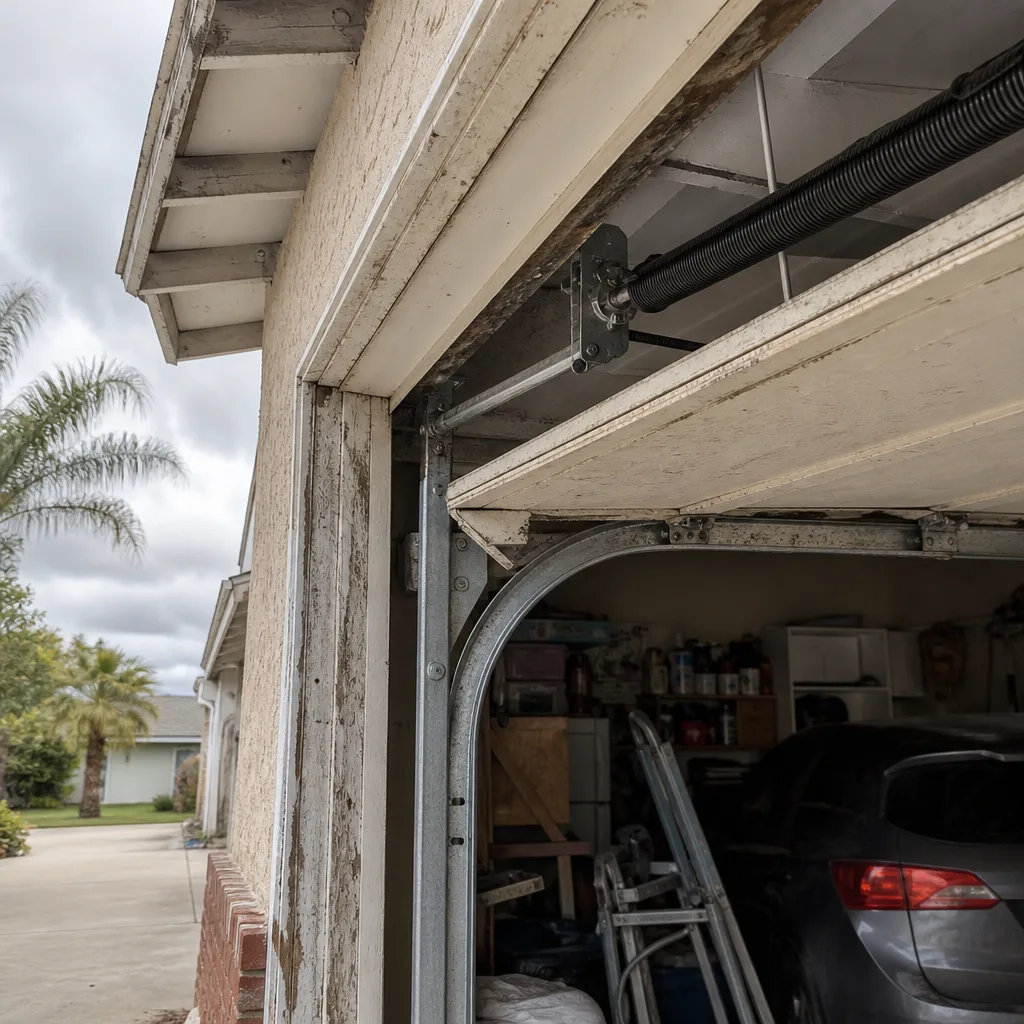 Before
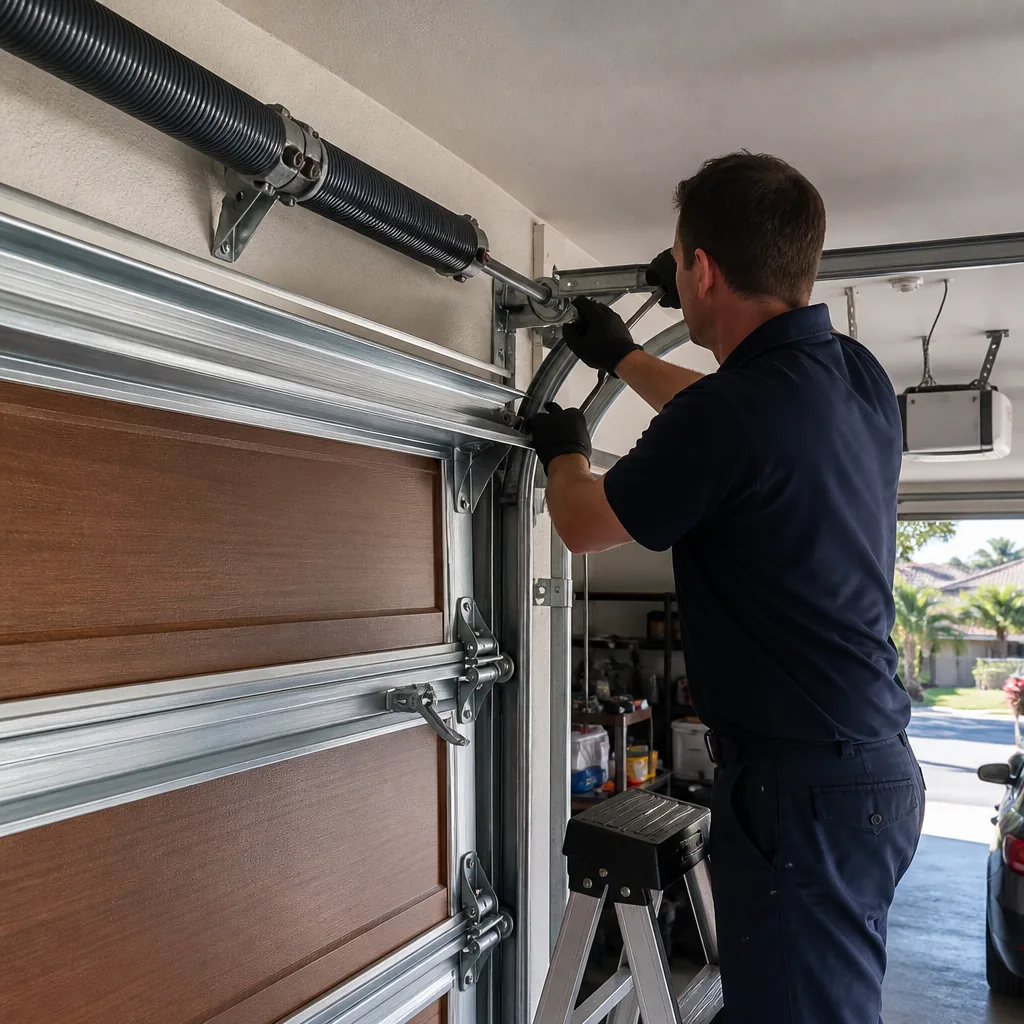 After
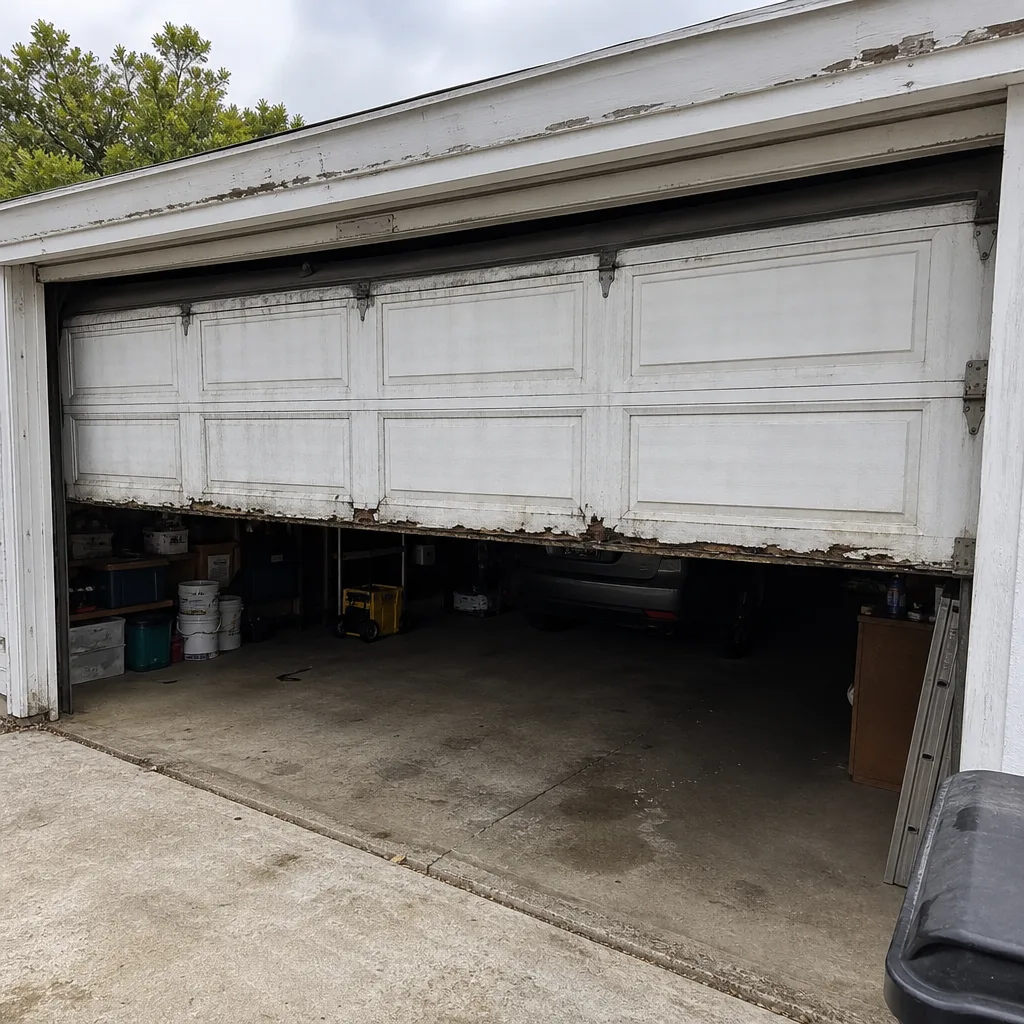 Before
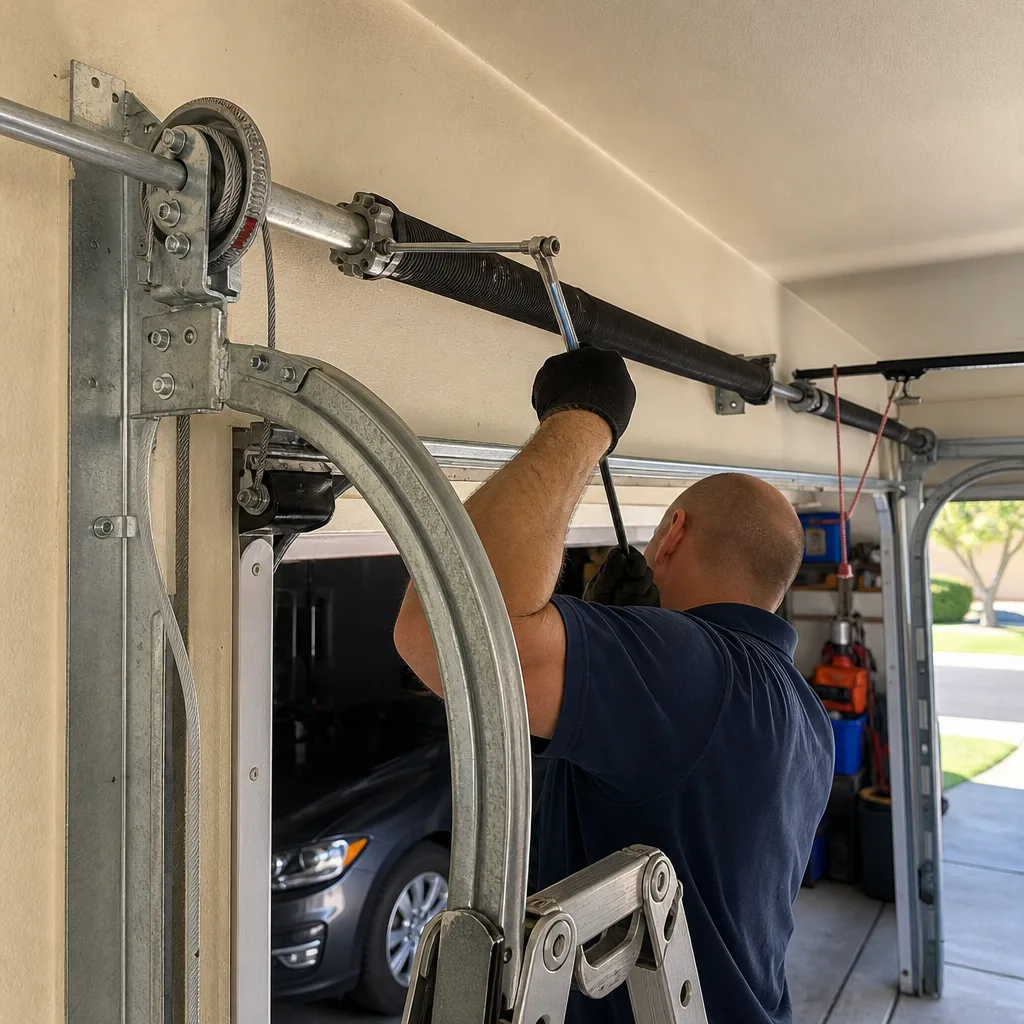 After
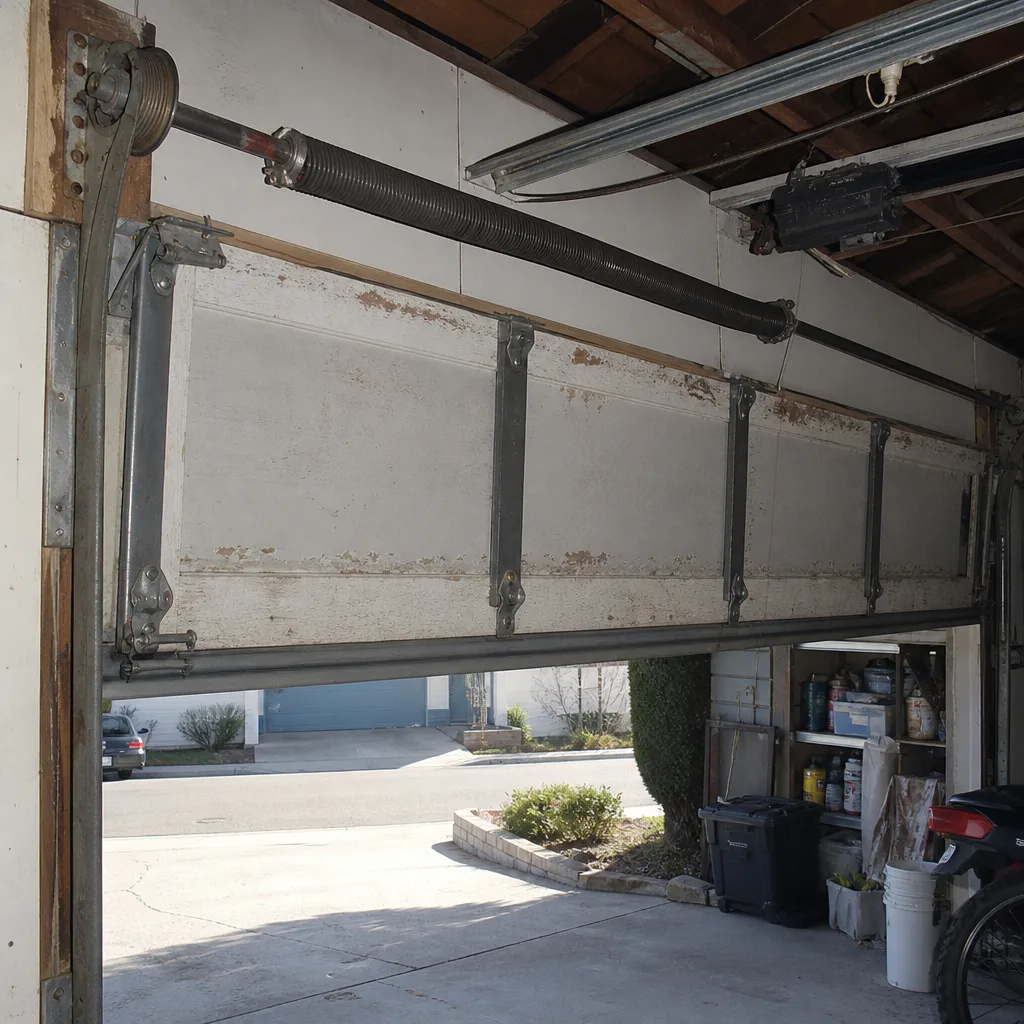 Before
 After