
Last updated November 2, 2026
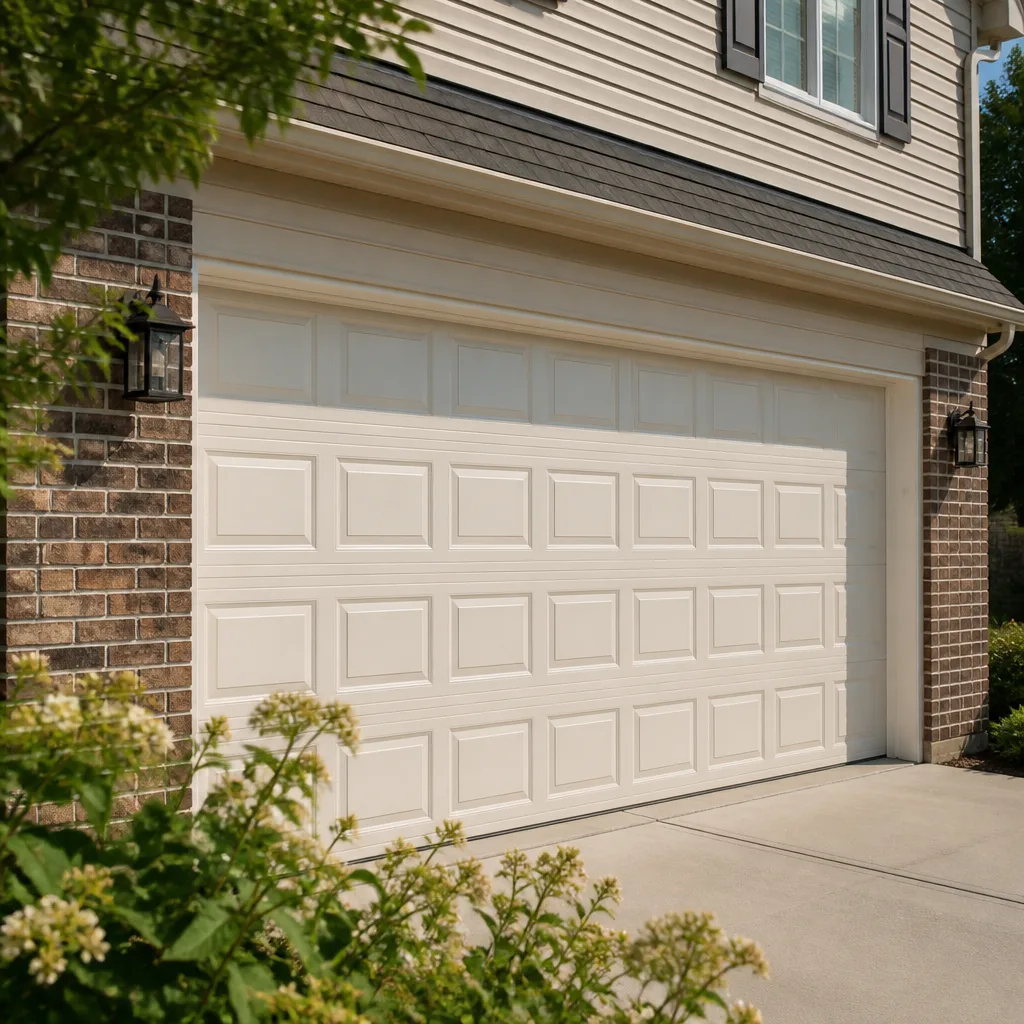 Raised-panel steel
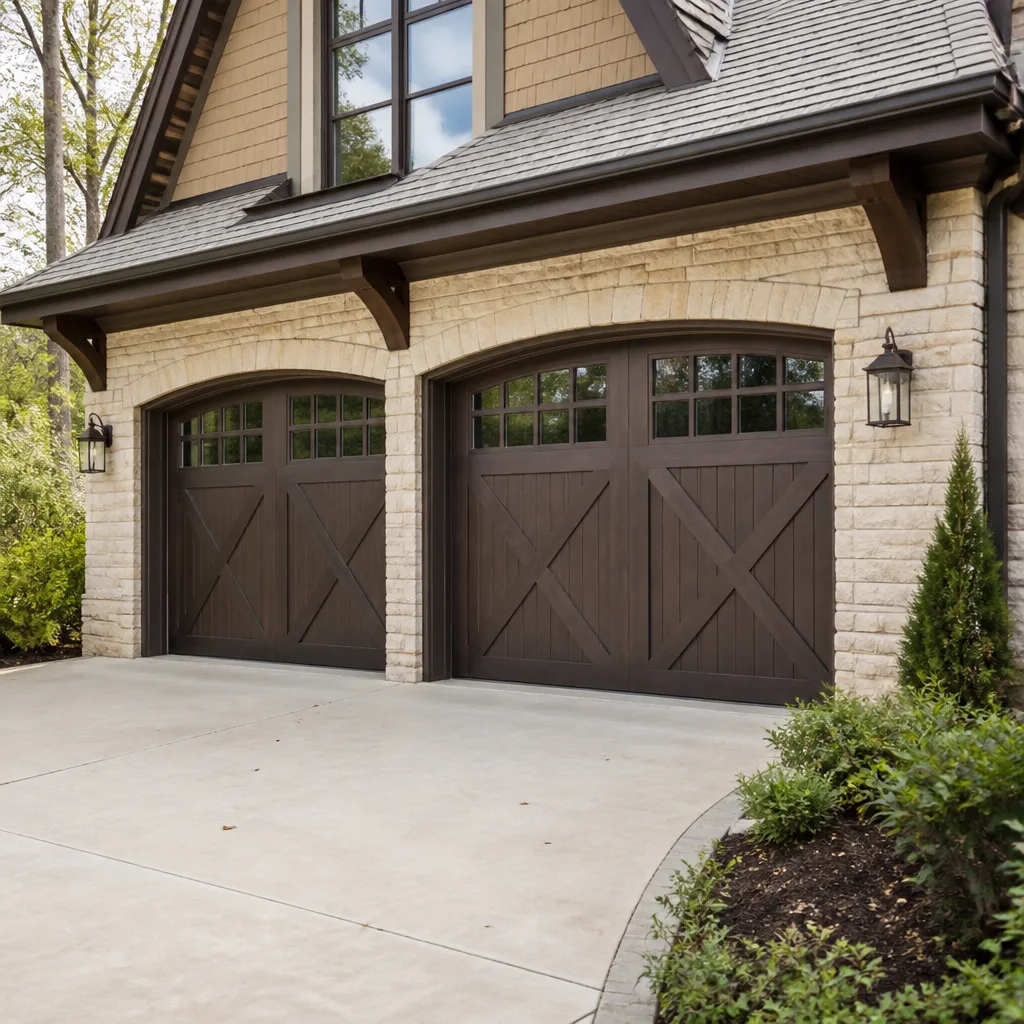 Carriage house
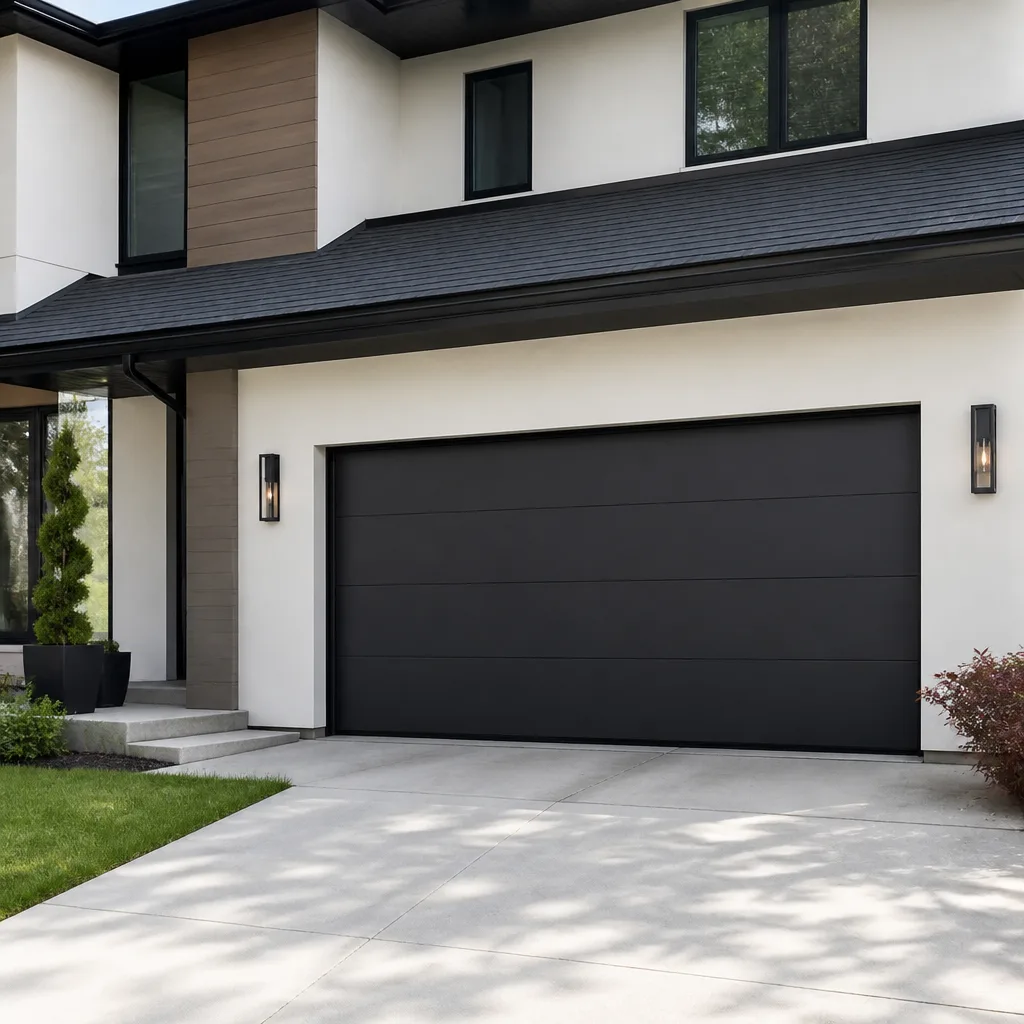 Modern flush
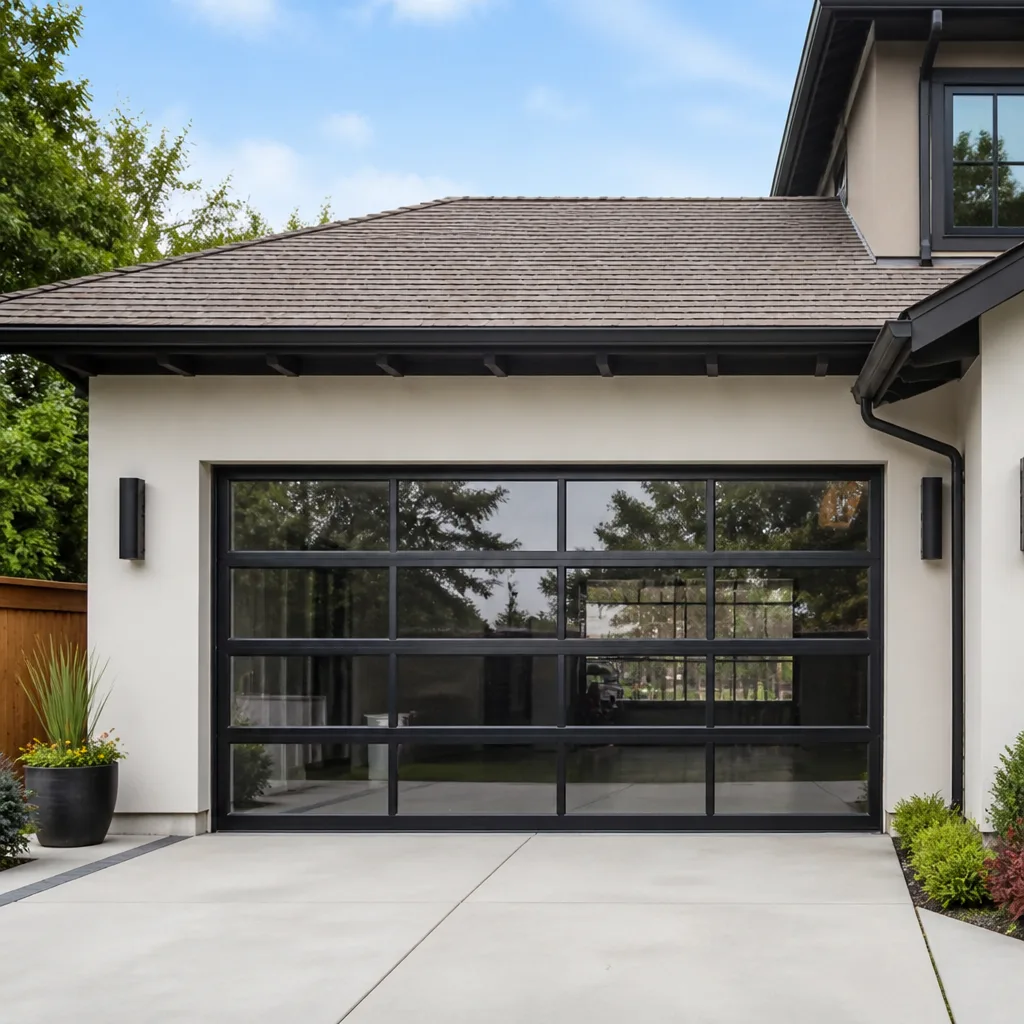 Full-view glass
 LiftMaster openers
 Chamberlain openers
Full 25-point door and opener safety check with every visit - springs, cables, rollers, tracks, and your LiftMaster or Chamberlain opener included
You get a price before we start. It does not change when the truck arrives.
Get your free estimateGarage Door Permits, Codes & Inspections in CA: What You Need to Know
Here’s a stat that surprises most Redlands homeowners: in California, swapping out your garage door opener needs no permit at all, but replacing the door itself can trigger a building permit, a Title 24 energy compliance review, and a final inspection. The line between “repair” and “new installation” is where city building departments draw their hardest line, and it’s also where DIYers and even some contractors get it wrong. This guide covers the exact permit thresholds, the UL 325 safety standard, what Title 24 means for your climate zone, and how a failed inspection after unpermitted work affects a future home sale in Redlands; for garage door warning signs every Redlands homeowner should watch for, see our companion guide. We’ll also walk through how to pull a permit through the City of Redlands Building and Safety division and what documentation a competent installer hands you before the inspector ever shows up.
Quick Answer
In California, replacing an existing garage door with a like-for-like unit typically requires a building permit and Title 24 energy compliance, while replacing a garage door opener alone does not. Adding a new garage door to an opening that wasn’t there before always requires a permit and often structural review. In Redlands specifically, the City of Redlands Building and Safety division issues permits over the counter or online, and most single-door replacements clear inspection in one visit if the installer documents the required insulation values and opener safety compliance.
Styles & brands we work with
- Raised-panel steel
- Carriage house
- Modern flush
- Full-view glass
- LiftMaster openers
- Chamberlain openers
Table of Contents
- What Triggers a Garage Door Permit in California
- Garage Door Opener vs. Garage Door: Two Different Code Worlds
- Title 24 and Climate Zone 10: What Redlands Homeowners Must Know
- UL 325: The Opener Safety Standard That Matters
- What Unpermitted Garage Door Work Costs You When Selling in Redlands
- How to Pull a Permit Through the City of Redlands
- What Inspectors Check: The Redlands Garage Door Inspection Checklist
- Common Mistakes to Avoid
- When to Call a Professional
- Frequently Asked Questions
What Triggers a Garage Door Permit in California
California Building Standards Code (Title 24, Part 2, also known as the California Building Code or CBC) governs residential garage doors at the state level. But each city issues its own local amendments and administrative rules, and that’s where the confusion starts. In Redlands, the City of Redlands Building and Safety division administers permits under the California Residential Code (CRC), which is the residential chapter of the CBC.
Here’s the practical breakdown of what does and doesn’t require a permit:
- Permit required: Installing a new garage door where no door existed before, or enlarging an existing opening. This means cutting a new opening in a wall, converting a carport into a garage, or widening a single door opening to fit a double door.
- Permit required: Replacing an existing garage door with a new door when the replacement changes the structural loading or requires modification to the header, jambs, or framing.
- Permit usually required: Replacing a garage door in most California cities, including Redlands, when the work includes any modification to the door opening, even minor reframing. Many local jurisdictions interpret “replacement” conservatively.
- No permit required: Replacing a garage door opener, rail, sensors, or logic board. The opener is an appliance, not a structural component.
- No permit required: Replacing springs, cables, rollers, hinges, or panels on an existing door. This is repair work, not new construction.
- No permit required: Like-for-like replacement where the existing opening, framing, and door dimensions remain completely unchanged and the city’s building official confirms no structural modification is involved. Some cities allow this without a permit; Redlands currently requires a permit for most full door replacements because the Building and Safety division wants the Title 24 energy documentation on file.
The single biggest tripwire is the word “replacement.” Homeowners assume replacing an old door with a new one is maintenance. Cities often see it as an alteration to the building envelope, which triggers energy code review. If your new door is heavier than the old one (a common scenario when switching from a hollow wood door to an insulated steel door from Clopay or Amarr), the springs and track system must be re-engineered for the new weight, and the header connection gets re-evaluated.
In our experience across Redlands neighborhoods like South Redlands, Smiley Heights, and the University Grove area, the permit question comes up most often during home listing prep. A seller replaces a banged-up 1980s wood door with a new steel door, the buyer’s inspector notices the door doesn’t match the city’s permit history, and the escrow hangs up while everyone sorts out a retroactive permit – exactly the kind of situation our Garage Door Repair Troubleshooting guide helps homeowners avoid. That’s an expensive way to learn the rule.
Garage Door Opener vs. Garage Door: Two Different Code Worlds
This is the distinction that trips up even experienced contractors. A garage door opener is an electrical appliance that hangs from the ceiling. A garage door is a structural component of the home’s exterior envelope. They’re regulated by completely different sections of the code.
An opener installation, replacement, or repair is classified as electrical appliance work. The California Electrical Code (CEC) covers the wiring, but most openers plug into an existing grounded receptacle, which means no electrical permit is triggered. The UL 325 standard (more on this below) governs the opener’s safety features, and compliance is a manufacturer obligation, not a building department inspection item in most residential cases.
A garage door, by contrast, is part of the building’s exterior wall assembly. When you replace it, the new door must meet current energy code (Title 24, Part 6) requirements for insulation, air infiltration, and U-factor specific to your climate zone. In Redlands, that’s Climate Zone 10, which has its own set of prescriptive requirements.
The practical takeaway: if you only need your Craftsman or LiftMaster opener replaced, no permit is needed and you can usually get that done in one visit. If the door itself is being replaced, plan for a permit, an energy compliance document, and a final inspection. This is also why garage door opener repair in Redlands tends to move faster than full door replacement: there’s no city involvement at all for opener work.
One more nuance: what about replacing an opener and a door at the same time? The door portion still requires a permit. The opener portion doesn’t. A good installer separates these in the paperwork so the city only reviews the part that actually needs review. We’ve seen permit applications get delayed because a contractor lumped everything together and the plan reviewer asked unnecessary questions about the opener.
Title 24 and Climate Zone 10: What Redlands Homeowners Must Know
Title 24, Part 6 of the California Code of Regulations is the state’s energy efficiency standard. It applies to new construction, additions, and alterations to existing buildings, including garage door replacement. The state is divided into 16 climate zones, and Redlands sits in Climate Zone 10, which covers the Inland Empire’s hot-summer, cool-winter band from San Bernardino through Riverside and Redlands into parts of the high desert fringe.
For Climate Zone 10, the prescriptive requirements for residential garage doors in conditioned or semi-conditioned spaces are:
- U-factor maximum: 0.31 for garage doors in conditioned spaces.
- Insulation requirement: Garage doors separating conditioned space from exterior must be insulated to meet the U-factor. Most insulated steel doors from manufacturers like Clopay, Amarr, and Wayne Dalton meet or exceed this with polyurethane or polystyrene cores.
- Air leakage: Doors must be weatherstripped and sealed to limit air infiltration. This is tested by the manufacturer and listed on the door’s NFRC (National Fenestration Rating Council) label.
- Exemption note: Unconditioned detached garages with no heating or cooling supply may be exempt from these requirements, but the city still wants documentation proving the exemption applies.
Here’s the part that surprises homeowners: most modern insulated steel doors exceed the Title 24 minimums without any special ordering. A standard Amarr Classica or Clopay Gallery series door with a polyurethane core easily clears the 0.31 U-factor in Zone 10. The permit issue isn’t finding a compliant door; it’s proving compliance to the inspector.
That proof comes in the form of a Certificate of Compliance (CF-1R) or a simplified energy documentation form that the installer prepares. For a straight door replacement, the city of Redlands typically accepts the manufacturer’s NFRC label data along with a simple compliance statement. If the door is non-standard, custom, or oversized, you may need a registered energy consultant to run calculations.
One Redlands-specific point: many homes in the older parts of town, especially in the Craftsman bungalow belt near the Redlands Bowl and the historic districts, have detached garages that were never conditioned. If your garage has no insulation, no drywall, and no HVAC supply, your replacement door may be exempt from Title 24 energy requirements, though you’ll still need the structural permit. Confirm this with the building department before ordering a door.
UL 325: The Opener Safety Standard That Matters
UL 325 is an Underwriters Laboratories safety standard that governs automatic garage door openers and gate operators. It has been mandatory for all garage door openers sold in the United States since 1993, and it’s been updated several times since, most notably in 2016 when the standard added stricter requirements for entrapment protection monitoring.
Here’s what UL 325 requires of every garage door opener installed in California:
- Primary entrapment protection: The opener must reverse the door when it encounters an obstruction, either through a mechanical clutch system or electronic force sensing.
- Secondary entrapment protection: A photo eye sensor system must be installed no higher than 6 inches above the garage floor on both sides of the door opening. If anything breaks the invisible beam while the door is closing, the door must reverse.
- Manual release: The opener must have a clearly marked manual release mechanism (usually the red cord and handle) that disengages the door from the opener and allows manual operation during a power outage.
- Warning labels: The opener must carry permanent labels warning against entrapment and instructing that the manual release be tested regularly.
- Wireless control protection: Openers manufactured after 1993 must use rolling code technology to prevent code grabbing.
When you buy a new LiftMaster, Chamberlain, or Genie opener, UL 325 compliance is built in at the factory. The compliance issue comes from installation and maintenance. The photo eyes must be mounted at the correct height, aligned properly, and wired so the door won’t close if the beam is interrupted. We regularly see photo eyes zip-tied to the track, pointing at the ceiling, or bypassed entirely, especially in rentals and older homes.
If you’re replacing an opener in Redlands and your old unit predates 1993, you’re also replacing a system that never had rolling code technology. That’s a security vulnerability you can’t patch; you can only replace. Modern openers from LiftMaster, Chamberlain, Genie, and Craftsman all exceed UL 325 minimums, and units sold since 2016 include the updated monitoring logic that checks the photo eye circuit continuously, not just during the close cycle.
One safety note: while UL 325 doesn’t require a permit or inspection for residential openers, it does require that the system function correctly at all times. A door that closes on a child or pet isn’t a code violation; it’s a catastrophic failure, and the liability lands on the property owner. Test your photo eyes monthly by closing the door and rolling a ball under it. If the door doesn’t reverse, call a professional.
What Unpermitted Garage Door Work Costs You When Selling in Redlands
We see this scenario several times a year in Redlands: a homeowner lists their house, the buyer makes an offer, escrow opens, and the buyer’s home inspector notes that the garage door is newer than the city’s permit history shows. What happens next is predictable, expensive, and entirely avoidable.
In California, a seller is legally required to disclose unpermitted work on the Transfer Disclosure Statement (TDS) and the Seller Property Questionnaire. Failing to disclose unpermitted garage work can void a sale, trigger a lawsuit, or force the seller to return the escrow deposit. In practice, what usually happens is messier: the buyer’s agent requests the seller to pull a retroactive permit before closing.
A retroactive permit in Redlands typically costs two to three times the original permit fee, and it triggers a full inspection. If the door was never inspected, the inspector is now looking at a completed installation with no way to verify the header attachment, the spring mounting, or the energy compliance documentation. If the door fails inspection, the seller is now paying for demolition and reinstallation at closing, often under a tight deadline.
We’ve also seen Redlands escrows nearly fall apart over this issue. A buyer’s inspector flags the door, the buyer’s lender puts a hold on funding until the permit clears, and both agents scramble to find an installer who can pull a permit and schedule an inspection within the escrow window. In a slower market, that’s deal-killing territory.
If you’re planning to sell a Redlands home in the next 12 to 24 months and your garage door was replaced without a permit, the cheapest fix is to address it now, on your schedule, while you can shop the work and absorb the cost at your own pace. If you wait until escrow, you lose all leverage.
How to Pull a Permit Through the City of Redlands
The City of Redlands Building and Safety division is located at the Civic Center on Cajon Street in downtown Redlands. The department processes residential garage door permits over the counter, and they accept many single-door replacement applications online through the city’s permit portal.
Here’s the step-by-step process for a residential garage door replacement in Redlands:
- Determine if you need a permit: Call the Building and Safety division or check the city’s website. Describe your project accurately: “replacing an existing single garage door with a new insulated steel door, same opening, no structural changes.” The counter staff will confirm whether a permit is required.
- Gather documentation: You’ll need the manufacturer’s specifications for the new door, including the NFRC label data showing U-factor and any structural details for the spring and track system. If your installer is pulling the permit (the standard arrangement), they handle this.
- Submit the permit application: Online through the city’s e-permit portal or in person at Building and Safety. Expect a fee in the low hundreds for a single-door replacement. The exact fee depends on the project valuation.
- Receive the permit: Single-door residential replacements often issue the same day or within one to two business days if the documentation is complete.
- Schedule the inspection: After installation, the installer schedules the final inspection. Redlands typically schedules residential inspections within one to three business days.
- Pass the inspection: The inspector verifies the door installation, the spring and track system, the opener safety features (if an opener was installed), and the Title 24 energy compliance documentation.
What should your installer provide before the inspector arrives? A copy of the permit, the manufacturer’s door specifications with U-factor data, a compliance statement for Title 24 Part 6, and a written description of the spring and track system. If the installer can’t produce these, the inspection will likely fail, and you’ll be rescheduling. For full garage door installation in Redlands, the permit and documentation should be part of the written proposal, not an afterthought.
What Inspectors Check: The Redlands Garage Door Inspection Checklist
When the Redlands building inspector arrives for a final inspection on a garage door replacement, they’re working from a specific checklist – similar to what’s outlined in our Garage Door Repair Maintenance Checklist for Redlands Homeowners. Understanding this list helps you know whether your installer did the job right before the inspector ever pulls up.
Here’s what the inspector verifies:
- Header attachment: The door’s top track and spring mounting plate must be securely lagged into the header. The inspector checks fastener size, spacing, and embedment depth.
- Spring system: The torsion spring or extension spring system must be sized for the door’s actual weight, and the mounting must meet manufacturer specifications. The inspector may ask for the spring’s IPPT (inch-pounds per turn) rating.
- Track and roller alignment: Vertical and horizontal tracks must be plumb, level, and securely mounted. Rollers must seat fully in the track with no binding.
- Opener safety (if applicable): Photo eyes mounted no higher than 6 inches above the floor, the auto-reverse function operational, the manual release accessible, and UL 325 labels present.
- Title 24 energy compliance: The NFRC label data and compliance documentation must match the installed door. If the door was field-assembled from non-certified components, this is where it fails.
- Weatherstripping and air seal: Bottom seal tight to the floor, side and top weatherstripping in place, and no visible gaps that would fail the air infiltration test.
- Fire separation (attached garages): In attached garages, the door between the garage and the dwelling must maintain its fire rating. The inspector isn’t checking the vehicle door for fire rating, but the wall between the garage and the house matters, and cutting a new opening can compromise it. For a straight door replacement in an existing opening, this is typically not an issue.
The most common failure we hear about from Redlands homeowners is the Title 24 documentation: the door is installed perfectly, but the energy compliance paperwork is missing, incomplete, or doesn’t match the actual door. The second most common failure is the photo eye height: installers mount the sensors at 8 or 10 inches off the floor instead of the required maximum of 6 inches, and the inspector fails the opener portion of the inspection.
Both failures are entirely avoidable with a competent installer. Neither has anything to do with the door’s mechanical function. They’re paperwork and measurement discipline, which is exactly what the inspection is testing.
Common Mistakes to Avoid
- Assuming an opener replacement and a door replacement need the same permit: The opener needs none; the door usually does. Confusing the two leads to unpermitted work on the door side and unnecessary delays on the opener side.
- Skipping the permit because “it’s just a swap”: If the title of the project involves removing an old door and installing a new one, the city likely considers it an alteration. We’ve seen this assumption cost sellers thousands during escrow in Redlands.
- Not checking Title 24 compliance before ordering a custom door: A beautiful custom wood door that doesn’t meet Zone 10 U-factor requirements won’t pass inspection, and you’ll be arguing with the manufacturer and the city at the same time.
- Mounting photo eyes above 6 inches: UL 325 says 6 inches maximum. It’s the most common failed item on opener installations, and it’s the easiest to get right.
- Hiring a contractor who can’t provide NFRC label data: If your installer looks confused when you ask for the U-factor of the door they’re proposing, find a different installer. Any competent garage door company working in Redlands has this data on file for every door they sell.
- Waiting until escrow to address an unpermitted garage door: Once you’re under contract, the clock is running. Retroactive permits in Redlands take time, and the buyer has no reason to be patient.
- Buying an opener online without checking UL 325 date codes: Openers manufactured before 2016 meet the older standard. They’re functional, but they lack the continuous monitoring logic that the current standard requires. Look for openers with a 2016 or later manufacture date.
When to Call a Professional
The permit and inspection process for a garage door in Redlands is a paperwork discipline, not a carpentry skill, but it’s a discipline most homeowners only need once. If any of these apply to you, call a professional who does this weekly, not once a decade: you’re replacing a door and you don’t know the U-factor of the replacement; your home is going on the market within two years and the existing door was never permitted; the opening needs any modification, even minor reframing; you’re converting a carport to a garage; or you simply want the permit pulled, the door installed, and the inspection passed without you standing at the counter of the Civic Center trying to explain what a torsion spring is.
Garage door repair in Redlands is one call. Garage Door Repair Redlands home covers the full cycle: repair, opener work, and complete new installation across all eight major residential brands, including Clopay, Amarr, Wayne Dalton, Raynor, LiftMaster, Chamberlain, Genie, and Craftsman. We handle the permit application, the Title 24 documentation, and the inspection scheduling so the city gets exactly what it needs to close the file. Call (833) 589-9897 for a free estimate on any garage door project in Redlands.
Frequently Asked Questions
A residential garage door replacement permit in Redlands typically costs between $150 and $400 depending on the project valuation, with retroactive permits falling at the higher end. The exact fee is set by the City of Redlands Building and Safety division and is based on the declared value of the work. Call (833) 589-9897 and we can give you a realistic number for your project before you apply.
No, replacing a garage door opener does not require a building permit anywhere in California because the opener is classified as an electrical appliance, not a structural component. The opener must still comply with UL 325 safety standards, but compliance is handled at the manufacturer level and through proper installation, not through city inspection.
You can, but if the installation requires a permit (which most full door replacements do), you’re responsible for the permit application, the Title 24 energy documentation, the installation quality, and a passing inspection. Most homeowners find that the spring tensioning alone, which involves high-tension torsion springs that can cause serious injury, is reason enough to hire a licensed specialist.
A failed inspection generates a correction notice that lists the specific items that must be fixed before re-inspection. Common corrections include missing Title 24 documentation, photo eyes mounted too high, and improper spring mounting. A re-inspection fee applies, and the work must be corrected before the permit can be closed. Get the details right the first time and the inspection is usually a fifteen-minute pass.
It depends on whether the garage is conditioned. If your detached Redlands garage has no insulation, no drywall, and no heating or cooling supply, it’s likely unconditioned space and your replacement door may be exempt from Title 24 energy requirements, though the structural permit still applies. The Redlands building department can confirm your specific case.
For a standard single-door replacement with complete documentation, the Redlands permit usually issues within one to two business days, and the final inspection is scheduled within one to three business days after installation. The whole process from permit application to closed permit typically takes one to two weeks depending on inspection scheduling.
The Bottom Line
California’s garage door rules split cleanly once you understand the categories: openers are appliances with no permit requirement, doors are building envelope components that usually need a permit, and new openings always need one. In Redlands, Climate Zone 10 drives Title 24 energy requirements that most modern insulated doors from Amarr, Clopay, or Wayne Dalton meet without difficulty, but the documentation must still be complete and accurate. The unpermitted door that surfaces during escrow is the most expensive garage door a Redlands homeowner ever owns. Pull the permit, document the energy compliance, pass the inspection, and the garage door never becomes a liability. For more guides & resources on keeping your garage door trouble-free, visit our blog.
Written by the team at Garage Door Repair Redlands, serving Redlands since 2018.
See the difference
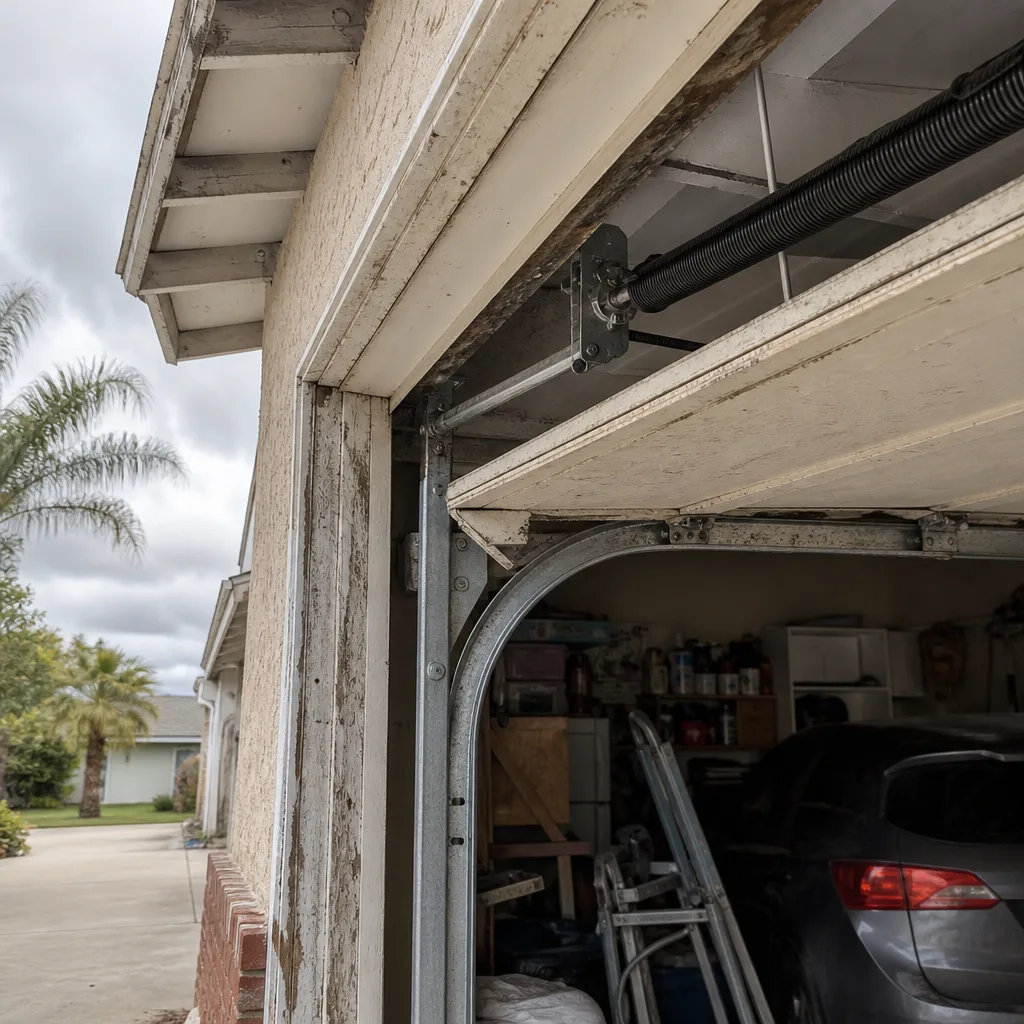 Before
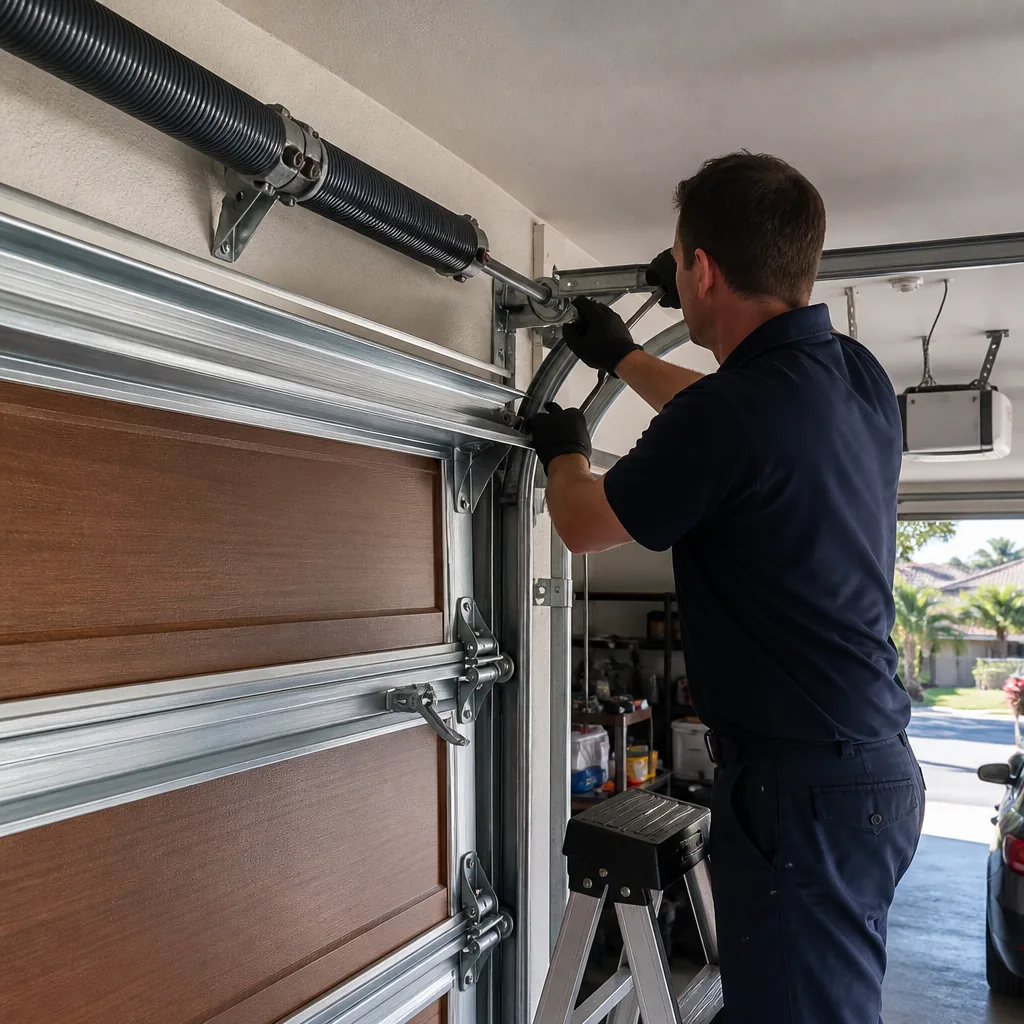 After
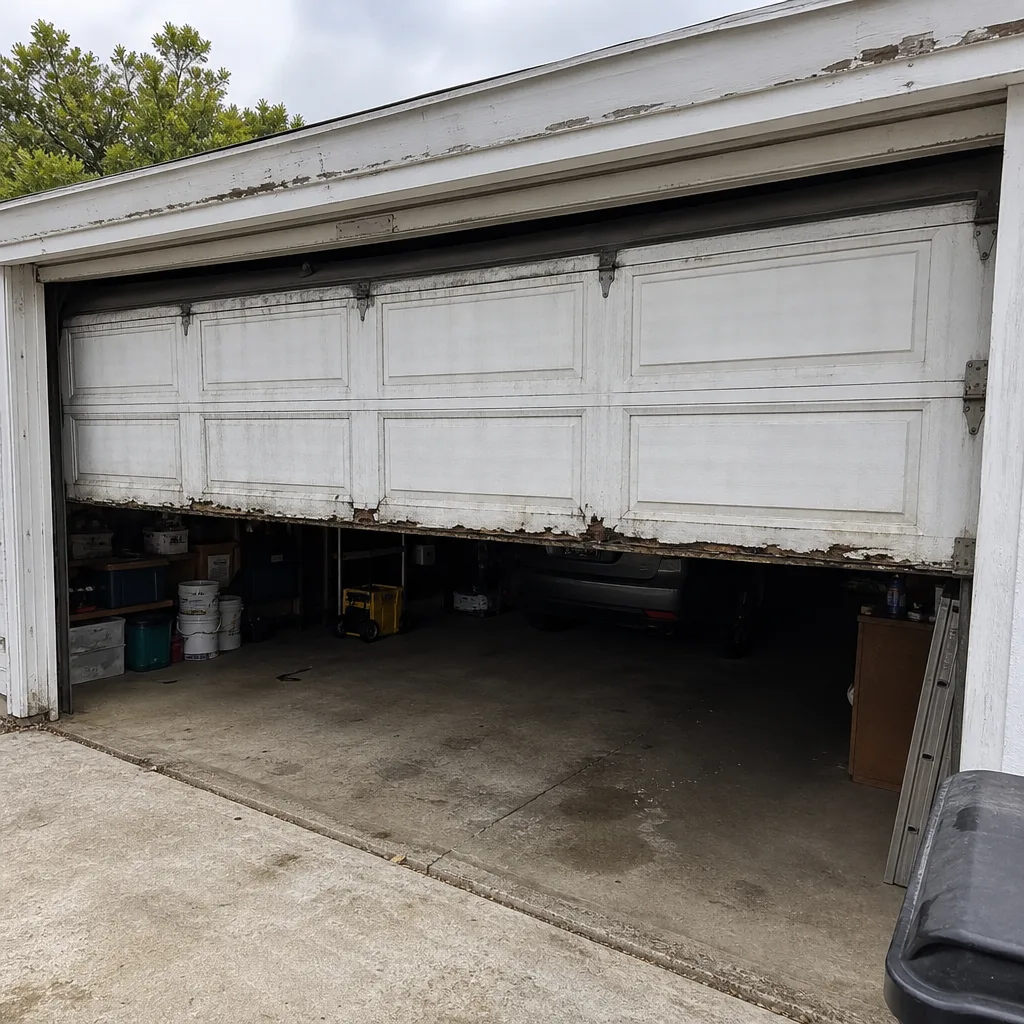 Before
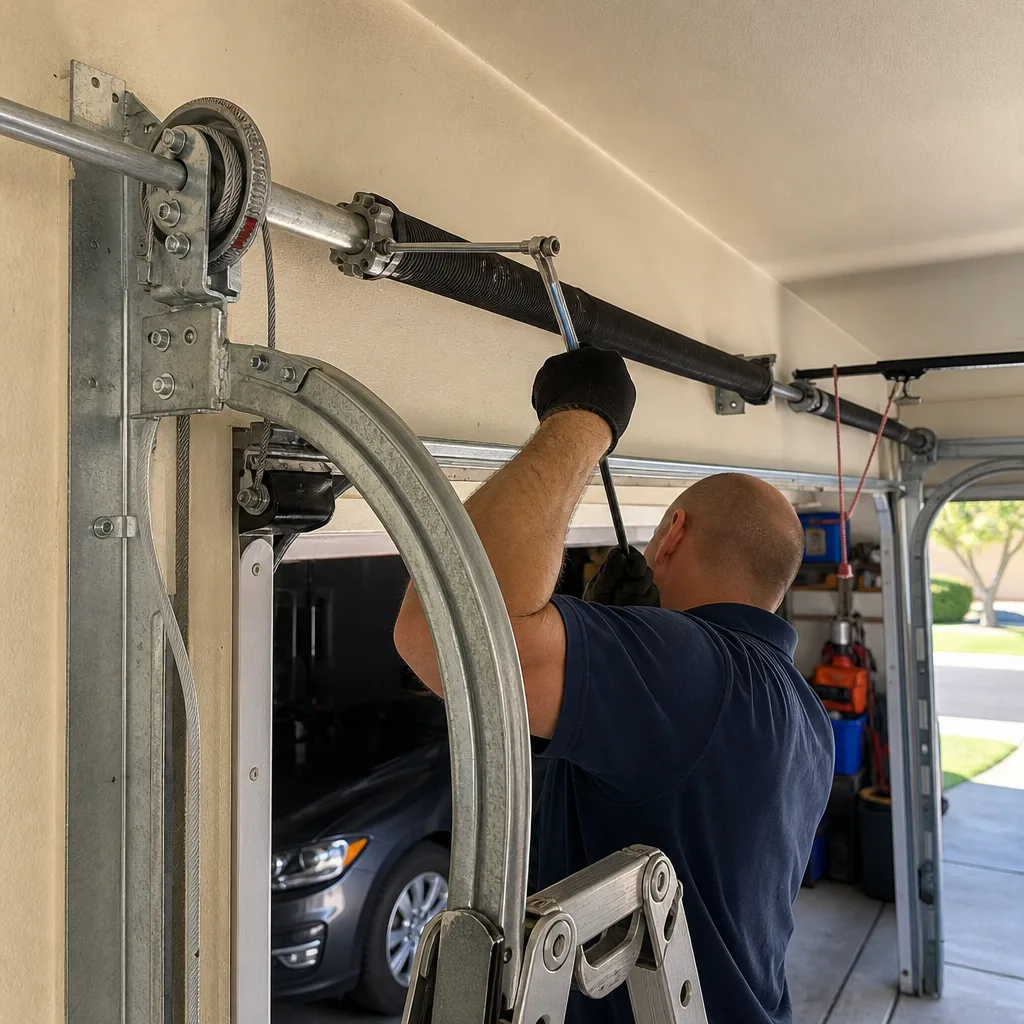 After
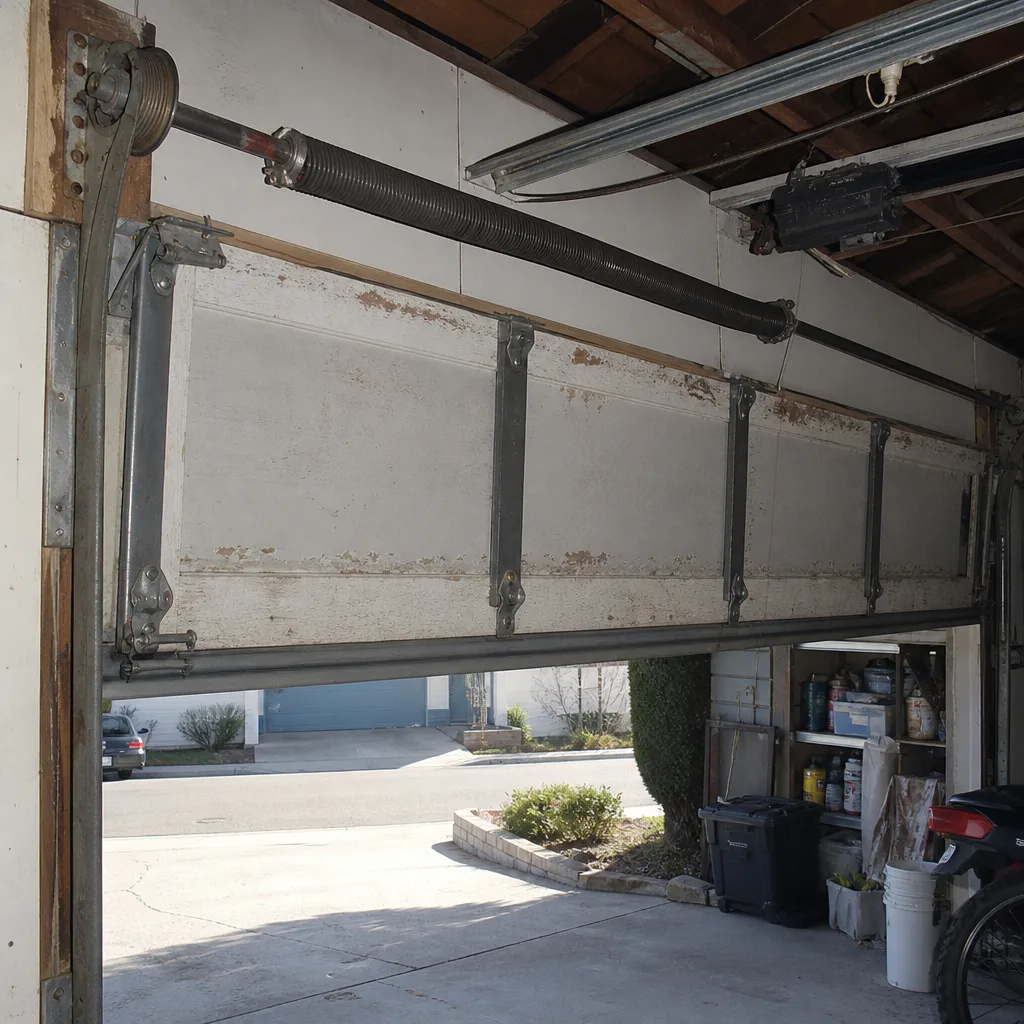 Before
 After